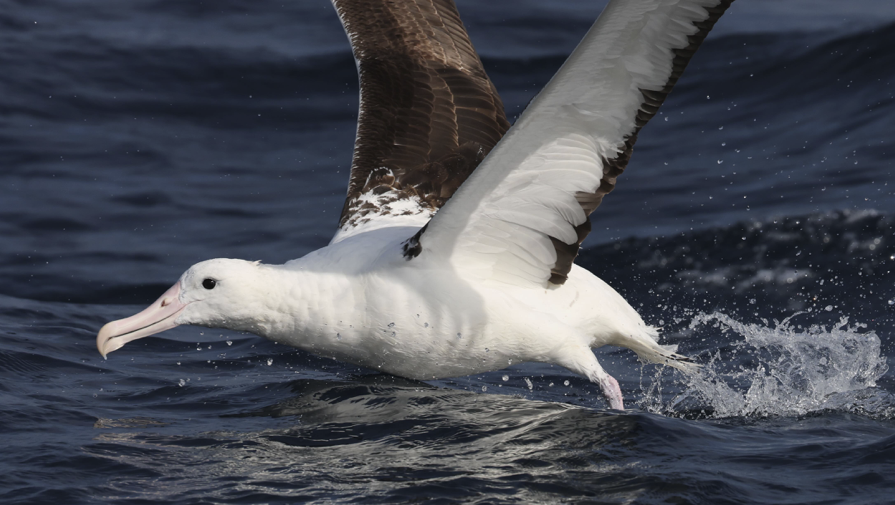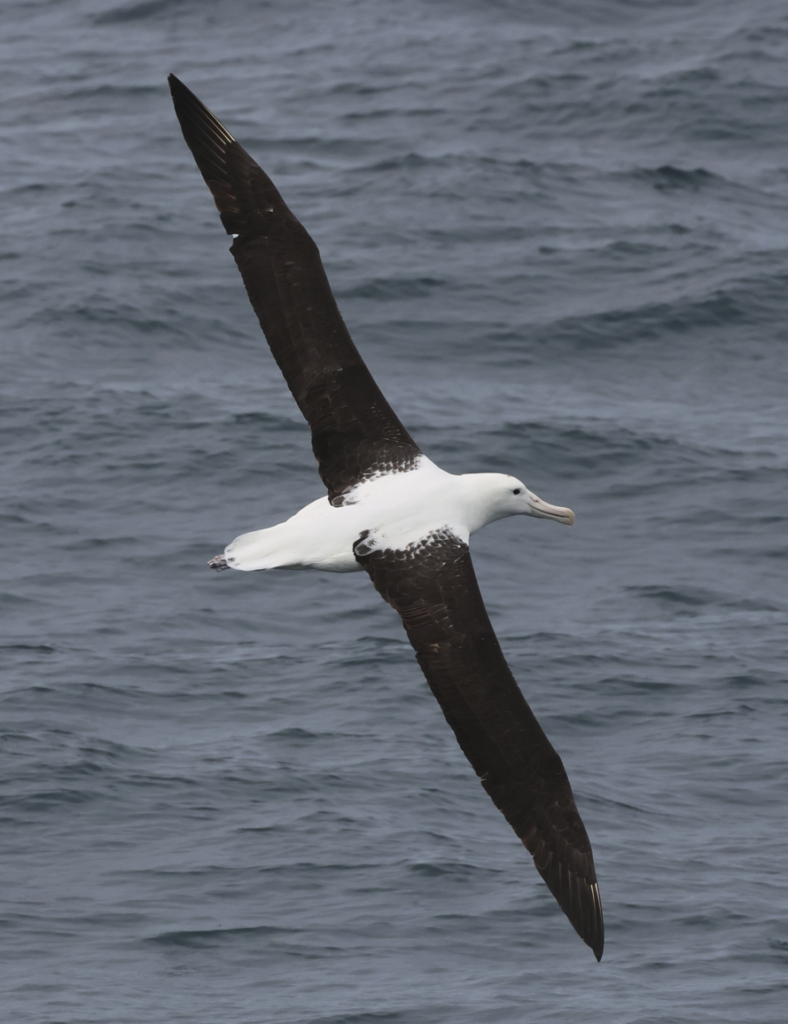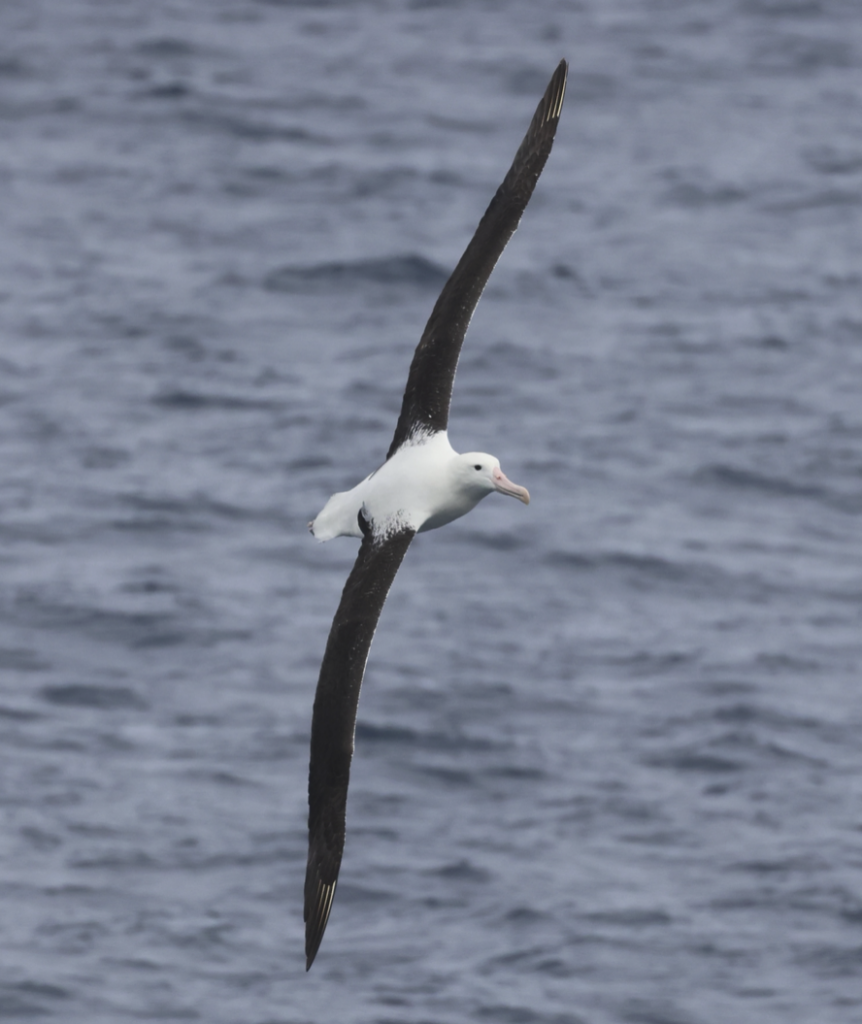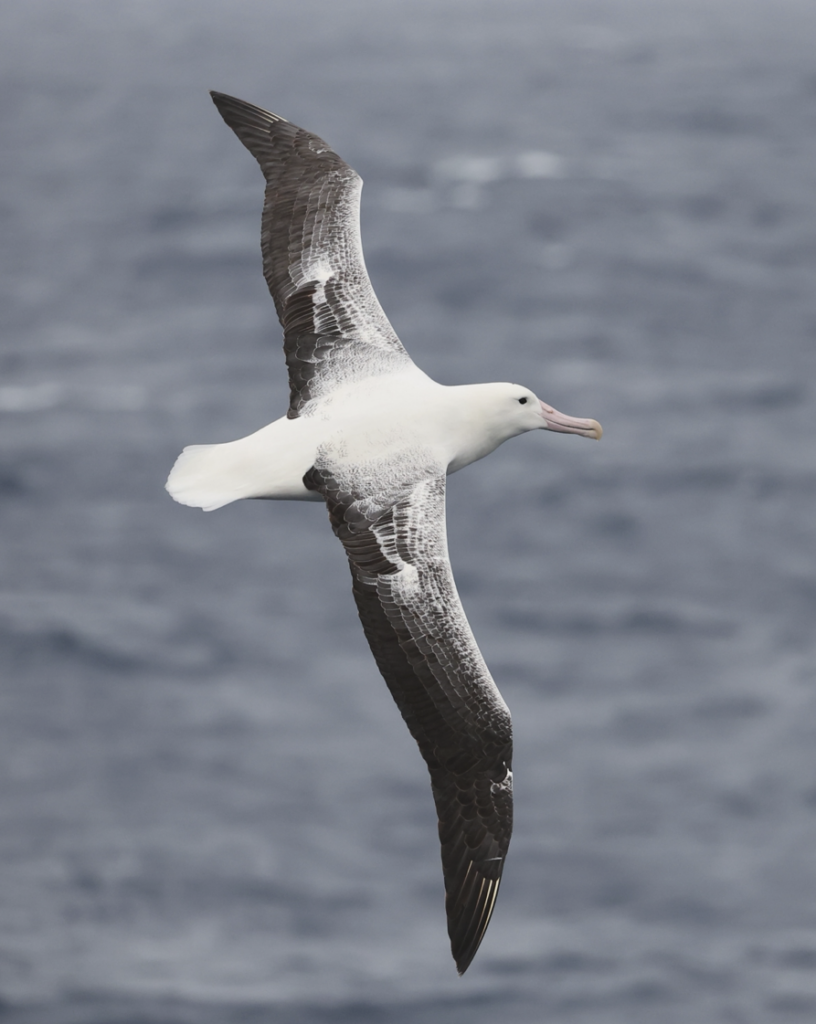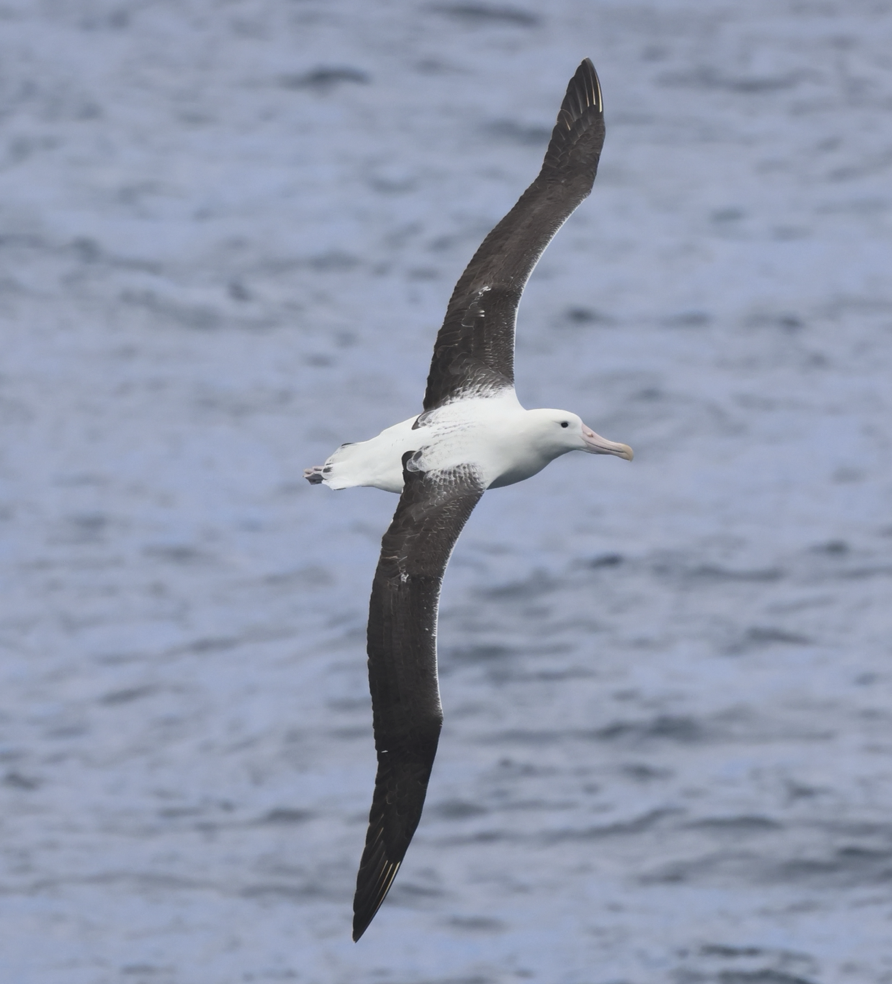
A ringed royal albatross photographed off Cape Point on 3 August 2026 raises questions about how to identify young birds of the two royal albatross species. Peter Ryan.
In the good old days, there were Wandering and Royal Albatrosses. Then life got complicated. Now we recognise four or five species in the wandering albatross complex, and two species of royal albatrosses. These splits reflect geographic differences among breeding populations, but greatly complicate identification at sea. Among wandering-type albatrosses, the gradual progression from chocolate-brown juveniles to more or less whitish older birds takes decades, with the rate of change and the end points differing between sexes as well as among species, making it almost impossible to identify individuals away from breeding islands.
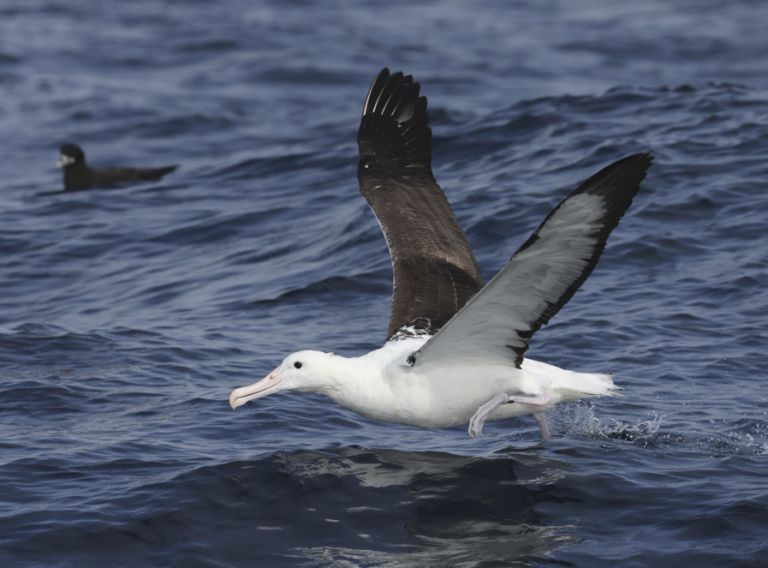
Identification of the two Royal Albatrosses is more straightforward. Their juveniles have mostly white bodies, more closely resembling adult birds. The main difference between the two species is that Southern Royals, which breed at Campbell and the Auckland Islands, gradually develop a white upperwing, whereas Northern Royals, which mainly breed at the Chatham Islands, retain a black upperwing at all ages. The only identification challenge is posed by young birds, which have black upperwings in both species.
In Oceanic Birds of the World, Steve Howell and Kirk Zufelt indicate that juvenile royals can be identified based on the colour of the leading edge of the wing: mostly black in Northern Royals and white in Southern Royals. In Seabirds: the New Identification Guide, Peter Harrison is a little more circumspect, suggesting that some juvenile Southern Royals have a fully black upperwing and are inseparable from juvenile Northern Royals. SASOL Birds of Southern Africa also cautions that some immature birds may be impossible to separate at sea.
This debate is relevant to birders off the Cape of South Africa, where royal albatrosses are now more commonly encountered than wandering-type albatrosses, but most are young birds. On 3 August 2026, four royal albatrosses were seen attending a trawler 35 nautical miles southwest of Cape Point. From photographs, I thought there were three Northern Royals and one Southern Royal, but one of my ‘northerns’ had a fair amount of white on the leading edge of the wing. When I shared the images with experienced seabirders in South Africa, Australia and New Zealand, most thought it was a Southern Royal. Fortunately it was ringed, and I was able to read the ring number. It was a first-year Northern Royal Albatross ringed as a large chick on Rangitatahi (Little Sister) off the Chatham Islands at the end of August 2025.
This cautionary tale highlights the challenge of identifying royal albatrosses. To be sure you have a Southern Royal, it should show some white feathering on the elbow joint, and a definite Northern Royal needs to have lost most of the immature dark barring on the back and tail and still have fully dark upperwings.