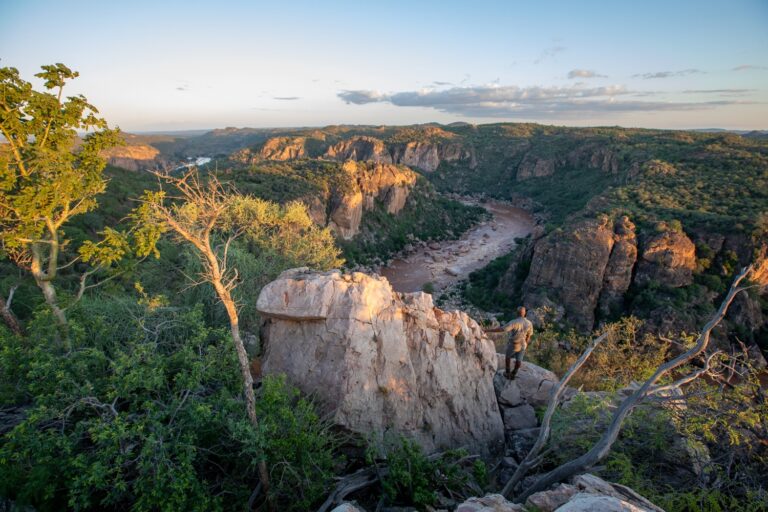
In the Kruger Park’s remote north, the landscapes and special birds of Pafuri make a compelling case for unfinished business.
Text & photographs by Anton Crone.
How Bongs spotted the bird – confidence, experience, sheer certainty of its location – I couldn’t tell. However he’d done it, by then I had learnt to keep my trigger finger ready, shutter speed dialled high, aperture wide open. Vongani ‘Bongs’ N’waila, our guide, was uncannily successful at finding special birds, and the towering fig trees, clear skies and balmy heat hadn’t lulled me into a false sense of calm. I was ready.
‘Böhm’s Spine…!’
I had one leg over the vehicle’s side before Bongs could say ‘…tail!’
To my wife Sarah and our friends Leanne and Richard Pringle I must have looked every bit my 54 years, clambering out with an anguished groan, trying to unhook a foot from the railing while juggling my camera before it hit the dirt. In my mind, however, I was a special forces operator, boots on the ground before the wheels stopped rolling, camera skyward, primed for action.
Had the camera been set to mechanical shutter, I’d have completed the fantasy with the rapid rattle of a machine gun, targeting anything that moved. Instead, I was firing an electronic shutter at 20 frames a second, silent but deadly. My finger pressed down harder than a prodigy on a TV quiz show, whooping each time the autofocus locked onto a fast-moving target. I was convinced I had magazine-worthy shots in the bag.
Later, checking the haul, reality intervened. About 100 photographs of empty sky, the odd wing, head or rump at the edge of frame, around 50 fair shots of regular swifts, a few errant bugs, five of my foot and three of a Böhm’s Spinetail, overexposed and more pixellated than a pimply teenager once zoomed in. Still, the short spiny tail was just clear enough.
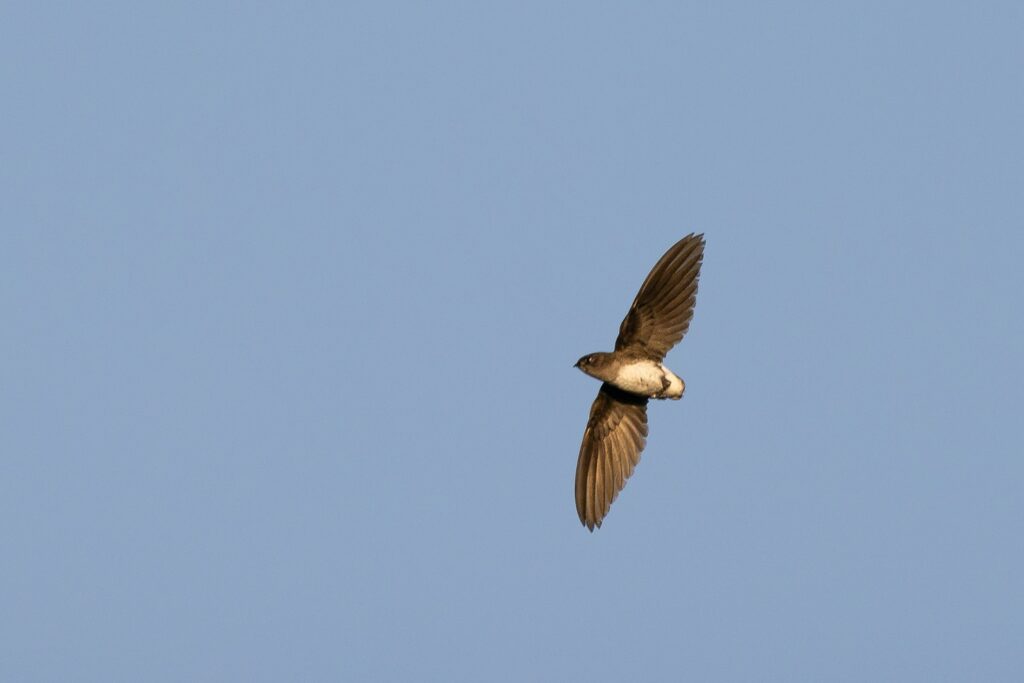
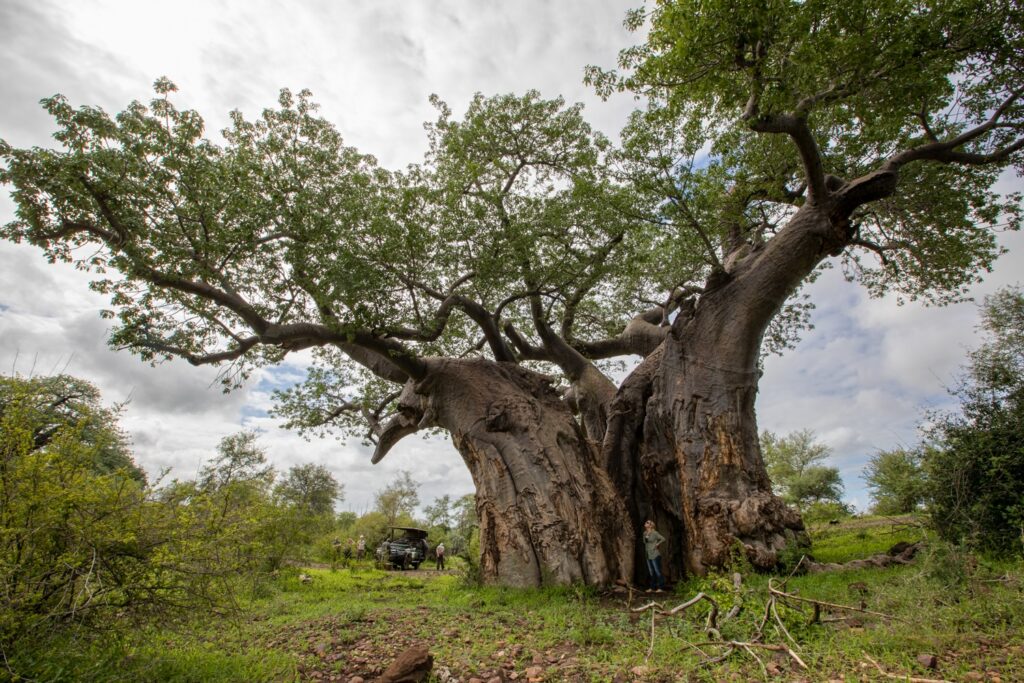
A few minutes later, a similar scene played out in a grove of baobabs, a known nesting site for Mottled Spinetails. This time my photos were more mottled than the birds, but the thrill was there, the chase followed by the capture. We all felt it. Bongs felt it no less, despite years of experience, and we basked in the afterglow, chattering like a gaggle of guineafowl.
We had competition. Crested Guineafowl are ubiquitous in the far north of the Kruger National Park. We were staying at Return Africa’s Pafuri Camp, with access to the Makuleke Concession and its renowned birdlife. This slice of South Africa attracts adventurous species that venture over the Limpopo, far from their normal range, to entertain and frustrate local birders. Our targets included Racket-tailed Roller, both spinetails, Three-banded Courser and Collared Palm Thrush. It helped that Bongs knew where to look and that he could read a tyre track like a book.
The morning after the spinetails, he manoeuvred the vehicle down a winding track that skirted a hillside. To the right, a wall of rock offered shade, trees clinging desperately with a tapestry of gnarled roots. To the left, the land dropped away towards the Limpopo floodplain where vervet monkeys balanced on high branches, welcoming the early sun, while birds sang to announce they had made it through the night.
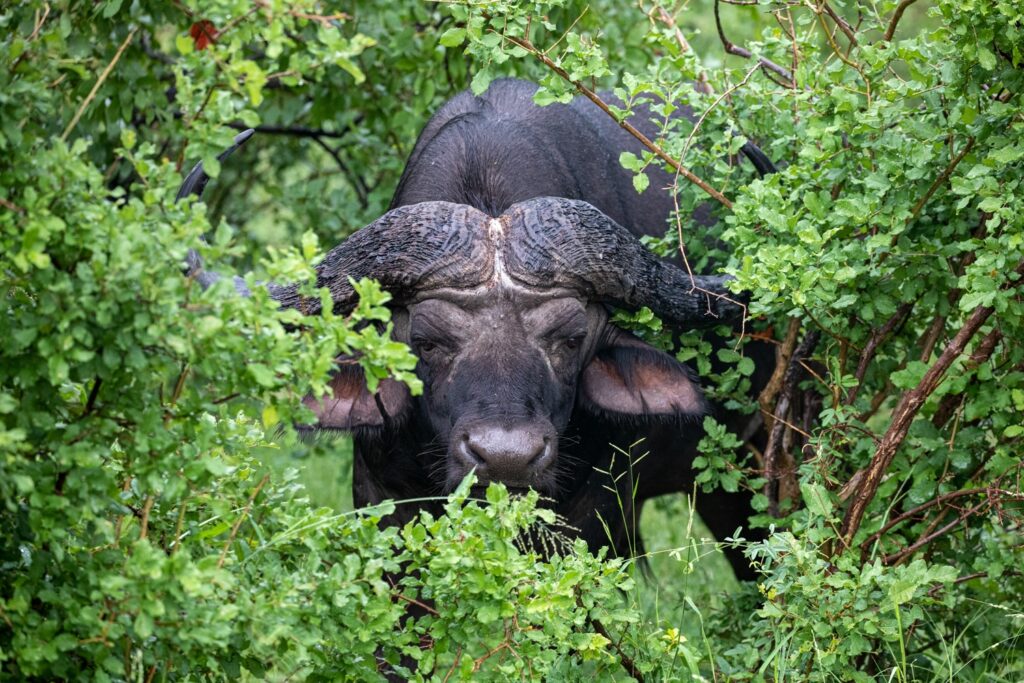
After circling small koppies and monumental baobabs, we stopped on a slope overlooking a marsh backed by a cliff. Breakfast. A large herd of buffaloes munched juicy grass while I sipped coffee and crunched a rusk loudly enough to miss Sarah calling me. On her second attempt she pointed to the cliff, where a Verreaux’s Eagle circled on the warming air.
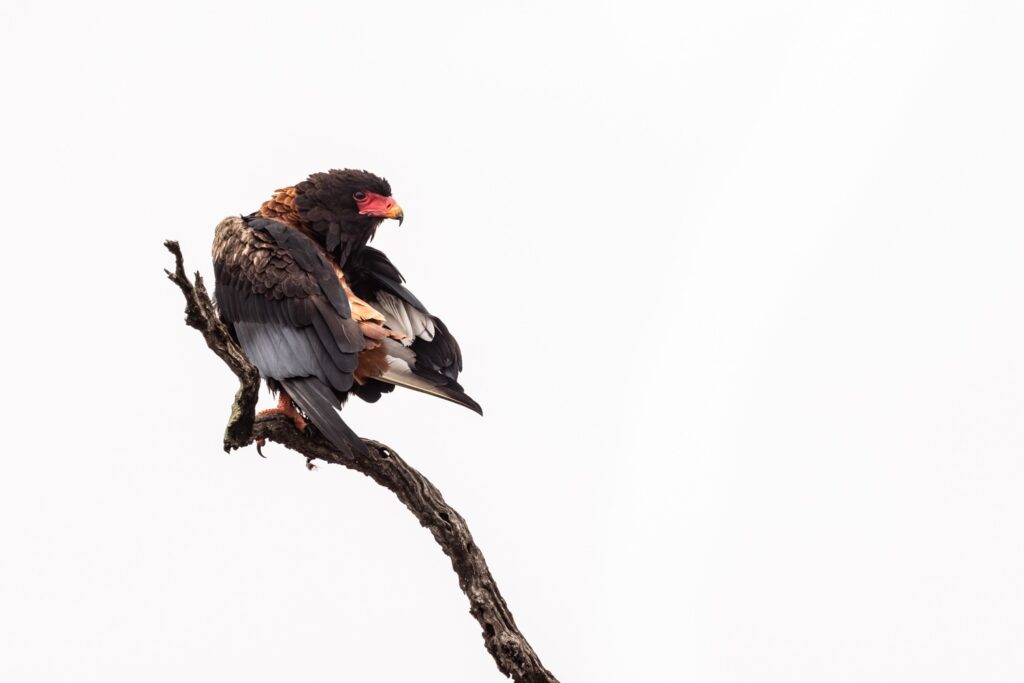
We wandered down to the marsh edge and birded along the reeds, rewarded with a bounty of waterbirds.
Back in the vehicle, Bongs promised a very special sighting. Soon he slowed to a crawl, scanning the edge of a rocky outcrop. In the rear-view mirror his face was a mask of concentration, then he smiled. On the soil lay a fresh tyre track – signs of a sudden halt, reverse, turn and stop. Bongs pulled in and stared at the rocks directly opposite the track.
He pointed at something so small and so well camouflaged that we fell into the familiar exchange. Which rock? That rock. That rock? No, that rock.
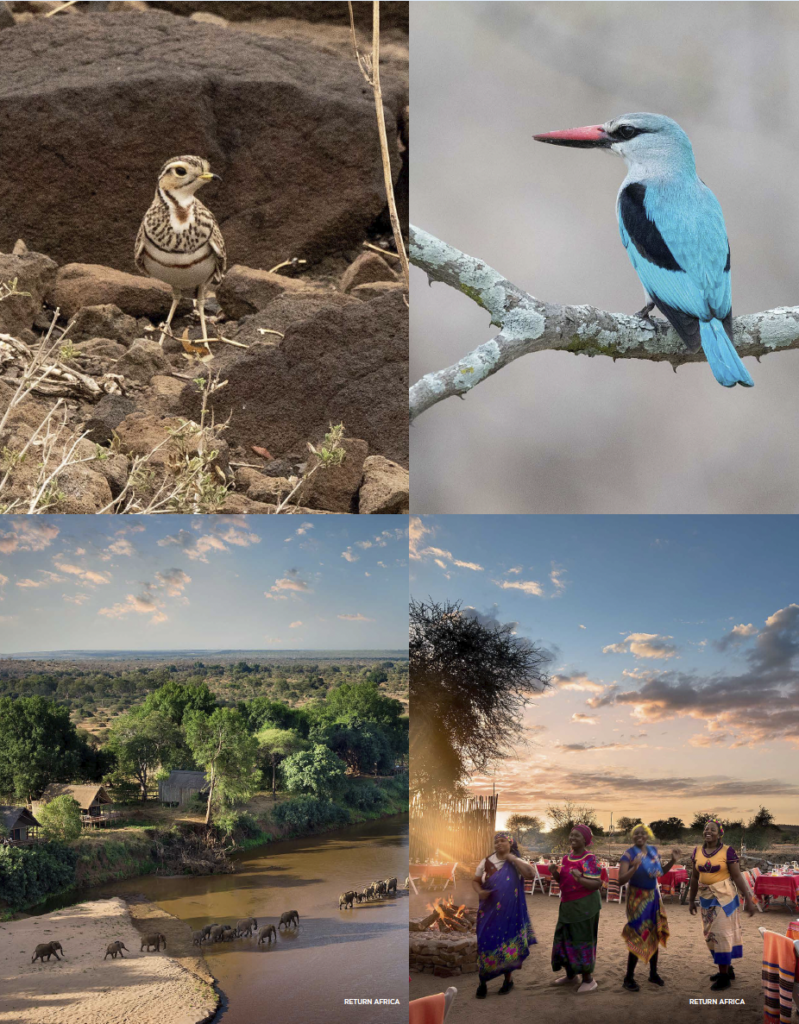
Eventually we could see what he was looking at. Not one, but a pair of Three-banded Coursers. One suddenly scrambled to the right. A tiny fledgling had wandered down to the rocks and was guided gently back into cover. The adult then stood guard, staring us down. After a brief barrage of photographs, we let it win.
On the way back to camp, Bongs stopped to pick up an object beside the track. ‘Do you know what this is?’ he asked, genuinely curious. Usually a walking encyclopaedia, for once he was stumped. Having spent time in the military, Richard and I recognised it immediately: the nose cone of a mortar flare. We explained how the round would be fired into the night sky, releasing a bright flare that drifted down on a parachute, illuminating the land below. With the region’s history in mind, it all clicked. This area had been patrolled by the South African Defence Force in the 1970s and ’80s to prevent insurgents crossing the Limpopo from Zimbabwe and Mozambique.
Long before that, the Pafuri region was home to the Makuleke, a Tsonga-speaking community that settled here in the 17th century. For centuries before, it was a key trading hub for gold and ivory along routes linking Great Zimbabwe and Mapungubwe. The nearby Thulamela Ruins bear eloquent witness to this layered history.
When Pafuri was incorporated into the Kruger National Park in 1969, the community was forcibly relocated. In the post-apartheid era, restitution legislation restored legal title to its ancestral land with the creation of the Makuleke Contract Park. Today, some 12 000 people are involved in ecotourism partnerships with Return Africa, generating livelihoods from land returned to them.
After sundowners on a bend of the Luvuvhu River, where White-fronted Bee-eaters erupted from their nesting burrows beneath our feet, we drove back through the enchanting fever tree forest. In the dancing glow of the spotlight we found a fledgling Verreaux’s Eagle-Owl and its watchful parent, an African Wood Owl inches from the vehicle, and a galaxy of buffalo eyes reflecting back at us.
Back at the lodge, excitement rippled through camp. A large herd of elephants lined the opposite riverbank, drinking in great gulps and sprays. In the early hours we heard them wading through the water and by morning they were scattered beside the elevated walkway that links the tents to the lodge. Walking safely among these giants was a privilege, and we admired the deep folds of their hides and the delicate pink veins inside their ears.
One morning was devoted to a great South African birding pilgrimage: repeated drives along the H1-9 between the camp and Pafuri Gate. Flanked by tall mopane forest, this short stretch of road hosts a pair of Racket-tailed Rollers so elusive they have reduced many birders to despair.
It was our fourth visit to Pafuri in pursuit of this bird. Over the years we’d encountered birders patrolling the road, burly men in small hire cars balancing enormous lenses, scanning either side like spectators at a painfully slow tennis match. Safari vehicles crept along with engines off, tyres crunching softly on gravel, a sound that somehow felt deafening.
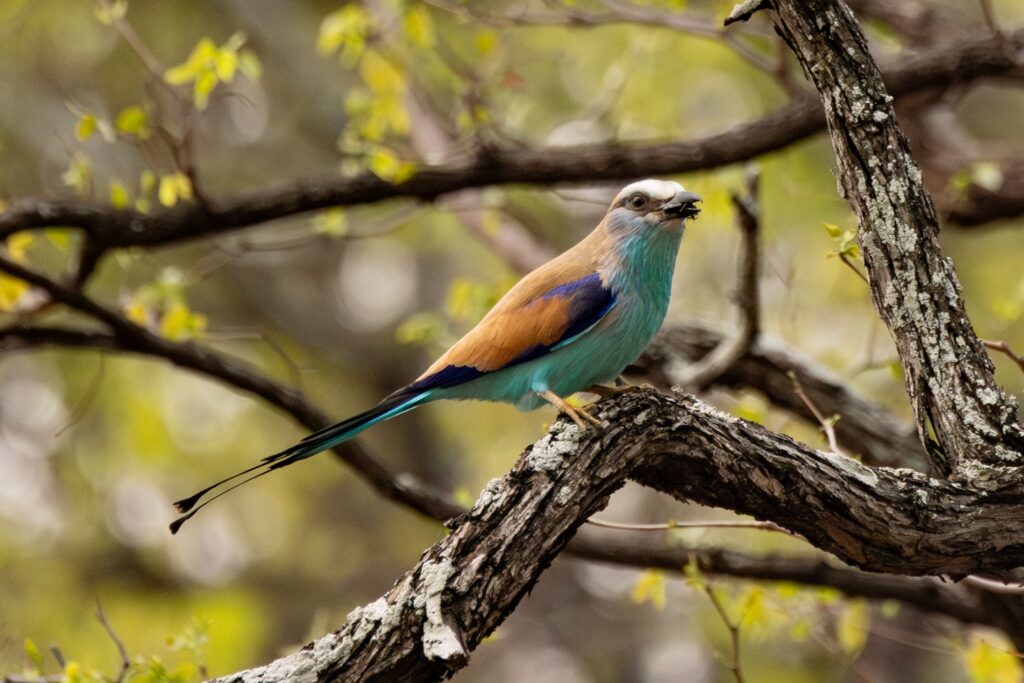
Persistence paid off. After four trips and countless passes, a flash of teal cut through the trees. The roller landed, posed, flicked its long racket tails and preened fastidiously. We did not blink. For once, we were speechless. Only once it had flown away did we breathe again, then chatter erupted like guineafowl. Feeling like we had won the lottery, on we went to Crooks Corner and rumours of a Collared Palm Thrush.
We devoted the entire afternoon to that short stretch of road, rolling up and down, scouring the forest, eyes like lasers, ears tuned like parabolic dishes. We returned the next morning, having skipped breakfast. Nothing. No sound, no movement, just rumbling stomachs.
Not giving up, we were there for the entire morning of the next day, forgoing the delicious breakfast at the lodge. Not a glimmer, not a sound. Giving in, we resolved to return next summer. If it took four trips or more, it didn’t matter. It was, after all, the perfect excuse to revisit one of the most beguiling corners of South Africa.
Anton was a guest of Return Africa.
Staying there
Return Africa’s Pafuri Camp is a luxury tented safari lodge in the Makuleke Concession of northern Kruger National Park. Located along the Luvuvhu River, its 19 en-suite tents offer river views, private decks, a pool, all meals and guided game drives or bush walks. The broader Pafuri Collection also includes the exclusive-use Baobab Hill House for families or groups, and two seasonal walking camps, Hutwini and Nkula, for immersive multi-day bush walks in ancient African wilderness. All stays celebrate extraordinary landscape, heritage, birdlife and wildlife, supported by the longstanding Makuleke community partnership.
Visit returnafrica.com for more information.
Return Africa offers reasonable rates for SADC residents, starting at R3940 per person sharing per night or R5910 per night for single occupancy at Pafuri Camp. Family special: first child stays free; second child pays R1600 per night. Valid from 1 June 2026 (when the camp re-opens after flooding) to 31 March 2027.
For reservations, call 011 646 1391or e-mail reservations@returnafrica.com
Notable birds
Saddle-billed Stork, Bateleur, Crested Guineafowl, Three-banded and Bronze-winged coursers, White-crowned Lapwing, Grey-headed (Brown-necked) and Brown-headed parrots, Verreaux’s Eagle-Owl, Pel’s Fishing Owl, Böhm’s and Mottled spinetails, Southern Carmine Bee-eater, Racket-tailed Roller, Crowned Hornbill, Mosque Swallow, Terrestrial Brownbul, Arnot’s Chat, Collared Palm Thrush, Green-capped Eremomela, Southern Yellow White-eye, Meves’s Starling, Yellow-billed Oxpecker, Purple Indigobird.