Constitutional Court ruling ends a decade-long battle over controversial oil and gas exploration rights off South Africa’s Wild Coast.
Anton Crone – Tue 18 August, 2026.
South Africa’s Constitutional Court has brought an end to a decade-long legal battle over Shell’s plans to explore for oil and gas off the Wild Coast, in a landmark judgment that recognises the profound cultural, spiritual and livelihood connections coastal communities have with the ocean.
In a seven-to-two majority judgment delivered on Friday, the apex court set aside a 2024 Supreme Court of Appeal (SCA) order that had effectively given Shell and its partner, Impact Africa, a lifeline to pursue seismic exploration along a 250-kilometre stretch of the Eastern Cape coast.
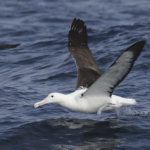
Shell and Impact Africa were granted exploration rights in 2014. The rights would have allowed seismic surveys, involving powerful sound waves being blasted through the ocean to map geological structures beneath the seabed. Such surveys can affect marine life across a wide range of groups, from whales, dolphins and other marine mammals that rely on sound, to fish, squid and other invertebrates. The potential disruption extends through the food web, affecting species that feed on marine organisms, including seabirds that forage in the coastal waters of the Wild Coast. For an ecosystem already under pressure from fishing, climate change and other human impacts, the consequences of disturbing such a complex web of life were a significant concern.
In September 2022, the Eastern Cape High Court in Makhanda found that the rights had been granted unlawfully. It identified three independent grounds for setting them aside: inadequate consultation with affected communities; failure to properly consider relevant factors, including cultural, spiritual and livelihood impacts, climate change and potential harm to marine life; and failure to comply with legal requirements relating to the project’s unsubstantiated socio-economic claims.
The SCA subsequently suspended the order setting aside the exploration rights, allowing Shell and Impact Africa another opportunity to pursue them through a renewal application that has been pending since July 2023.
The Wild Coast communities and environmental organisations argued that this remedy was not ‘just and equitable’, as required by the Constitution.
The Constitutional Court agreed.
Writing for the majority, Justice Jody Kollapen found that allowing the exploration rights to remain in place would effectively allow financial investment and commercial interests to outweigh serious constitutional violations. Such an approach, the court concluded, would send a dangerous signal that the rights of affected communities could be subordinated to commercial interests.
The applicants included Sustaining the Wild Coast NPC, Natural Justice and Greenpeace, together with representatives of the Umgungundlovu and Dwesa-Cwebe communities, Wild Coast fishers and Kei Mouth Fisheries.
The judgment comes amid a growing pattern of environmental disputes being fought through the courts. Last week, the Western Cape High Court dismissed a challenge to proposed seismic exploration off the West Coast, finding that the litigants had not followed the required legal process. Meanwhile, the Minister of Electricity and Energy is appealing a Gauteng High Court decision that prevents the government from pursuing new coal projects.
The Wild Coast ruling nevertheless establishes an important precedent for how environmental decision-making must account for the rights and interests of communities whose lives are intimately connected to natural ecosystems.
For South Africa’s coastal communities, the judgment represents more than a victory over a proposed exploration project. It affirms that the ocean is not simply a resource to be exploited, but a place of livelihood, culture and spiritual significance.
For the Wild Coast, the seismic guns have, for now, fallen silent.
Feature image: Beach at Coffee Bayon the Wild Coast. Rawpixel