Cape Town (08 December 2025) – The Western Cape has added 47 000 hectares to its conservation estate through the declaration of two new nature reserves and the expansion of two others.
This major boost to the province’s protected areas creates vital space for Cape mountain zebras to breed and improves protection for a wide range of threatened succulent plants, mammals and bird species.
The expansions significantly increase the size of Anysberg Nature Reserve in the Karoo and the Knersvlakte Nature Reserve in Namaqualand. Two entirely new reserves, Waterkloof near Ladismith and Zebraskop in the Gamkaberg area of the Klein Karoo, add further ecological value.
All four declarations were made possible through land purchased by WWF South Africa with funding from the Leslie Hill Succulent Karoo Trust and other partners.
Together, these properties strengthen ecological integrity and improve landscape connectivity. This is an increasingly important focus in conservation, creating corridors that allow wildlife to move more freely between protected areas. The declarations also contribute to South Africa’s commitment to conserve 30 percent of its land and marine areas by 2030, aligned with the United Nations’ global targets.
Dr Ashley Naidoo, CEO of CapeNature, said: “This is a significant step for protected area expansion in the Western Cape. By expanding and connecting protected areas, together we are conserving some of the world’s most threatened plants and animals and supporting the long-term survival of the Cape mountain zebra. This work would not be possible without our partners, particularly WWF South Africa and the Leslie Hill Succulent Karoo Trust, whose support makes this scale of impact possible.”
Jan Coetzee, WWF South Africa’s Landscape Manager for the Cape Floral Region, added: “This achievement is the result of years of dedication and collaboration. Securing these critical areas for future generations is a big win for conservation, the province, and its people. It is only possible through strong partnerships with key donors, conservation organisations, legal experts and provincial authorities, all working together for the greater good.”
Anysberg expansion
The Anysberg Nature Reserve has grown by 6 918 hectares with support from the Leslie Hill Succulent Karoo Trust. The expansion safeguards key botanical diversity and protects 14 vegetation types from both the Succulent Karoo and Fynbos biomes. Five of these vegetation types have never before been represented in a protected area.
The extension strengthens ecological linkages between Anysberg, Sanbona Nature Reserve, Destiny Nature Reserve and the Klipgat stewardship site. This biologically rich landscape is home to around 180 bird species, multiple antelope species, aardvark, leopards, Cape mountain zebras and the Critically Endangered riverine rabbit. The expansion also helps the region adapt to climate change by protecting essential ecological processes.
Knersvlakte expansion
In Namaqualand, the Knersvlakte Nature Reserve has been extended by 34 084 hectares, the largest single addition since its founding in 2014. Funded by the Leslie Hill Succulent Karoo Trust, the expansion greatly improves boundary consolidation and ecological integrity.
The added area protects nine new vegetation types, many of which were previously unprotected or poorly protected. The Succulent Karoo biome is one of the world’s most significant biodiversity hotspots, yet faces increasing pressure from illegal plant harvesting, prospecting and mining. The Knersvlakte Bioregion, a centre of endemism within this biome, hosts a remarkable array of miniature succulents, highly endemic species and important cultural heritage sites.
Zebraskop Nature Reserve
The newly declared 3 952-hectare Zebraskop Nature Reserve supports the Cape mountain zebra genetic programme by protecting essential lowland habitat with the potential to double the genetically important Gamkaberg population. Zebraskop will be managed as part of Gamkaberg Nature Reserve.
CapeNature is currently developing a corridor between Gamkaberg and Zebraskop, and monitoring is under way for three Cape mountain zebras translocated from Kammanassie Nature Reserve in 2024. The new reserve includes 11 vegetation types, including the Critically Endangered Gourits Asbos-Gwarrieveld, which is now formally protected for the first time.
Waterkloof Nature Reserve
The 2 062-hectare Waterkloof Nature Reserve forms part of the Klein Swartberg Mountain catchment and will be managed by CapeNature as part of the Swartberg Complex. As a key water source area, Waterkloof supplies Ladismith and surrounding communities.
The reserve contains seven vegetation types, including two that are only partially protected and one listed as Endangered. The addition enhances protection of the southern slopes of the Klein Swartberg and strengthens an important conservation corridor.
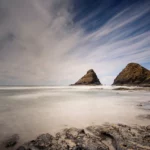
Feature image: Knersvlakte has been extended by 34 084 hectares.