How a quest for one bird can open up entire worlds.
Text Anton Crone
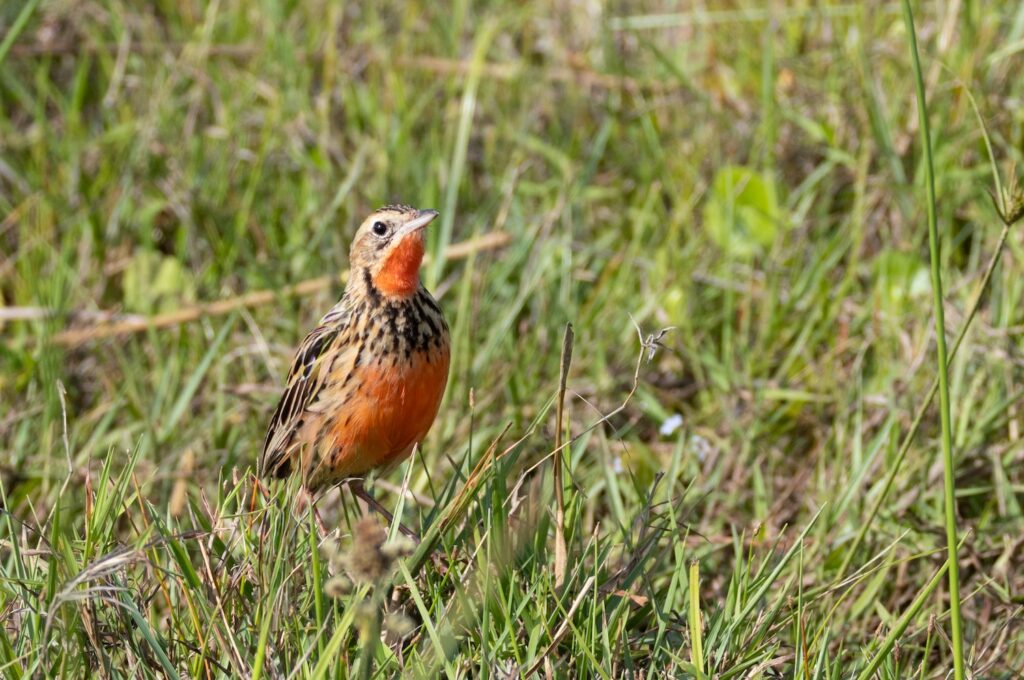
Our goal was the Rosy-throated Longclaw, a species found nowhere else in South Africa save for the north-eastern corner of KwaZulu-Natal. It’s an ‘uncommon resident in moist grassland surrounding open areas of fresh water’, according to Sasol eBirds, so our Thonga Beach Lodge guide, Gugulethu Mathenjwa, steered us towards moist grassland on the fringe of which Lake Sibayi glittered in the morning sun.
Anticipation was high. Longclaws had been seen here the previous day and, with fingers crossed, we descended a sandy track. The grassland opened up before us and we began scanning left and right. It was our first morning at Thonga – we were staying another two nights – so if we didn’t see it that morning our chances were still high. Nevertheless, our nerves piqued when a nightjar broke from its refuge and flew low over the grassland, circling back and giving us a chance to photograph it before vanishing into the grass. Thrilled by seeing a nightjar in daylight, we forgot about the longclaw while we tried to identify this difficult bird from the photo I had taken.
Feeling lucky, we pressed on into grass that grew greener and higher as we neared the lake’s shore. Following a fresh vehicle track, we skirted the edge of the lake and went inland. A beat of wings and a rosy flash burst from the grass followed by another a little further on. No photos this time – it was gone before we knew it – but we whooped and smiled, realising we had already achieved, in the first couple of hours, what we’d come here for. ‘What next?’ we wondered. Oh, there was so much more.


The other famous guests in the area are leatherback and loggerhead turtles. We were visiting in November, the nesting season had begun and our anticipation rose once again as we considered the prospect of actually seeing one of these marine species. As the turtles nest only at night, we had a whole day to wait and happily birded the shoreline with its Grey and Purple herons, White-faced Whistling Ducks, Spur-winged Geese and a Black Heron fishing beneath the shroud of its dark wings. African Pygmy Geese left a trail of glittering water as they flew away and a Eurasian Whimbrel worked a narrow sandbank nearby.
We steered inland, the grass brushing the sides of the vehicle as a rapid wingbeat alerted us to a Rufous-naped Lark as it burst into song. In the distance, a Red-collared Widowbird alighted on a long grass stem, bending it in a perfect arc.
Stopping at a vlei, we watched Nguni cattle wading in the shallow waters as they munched on juicy shoots. African Jacanas danced across the lilies and what we had imagined was a jacana fledgling at closer inspection turned out to be a Lesser Jacana. There was nothing lesser about it; this was another big tick for the morning.
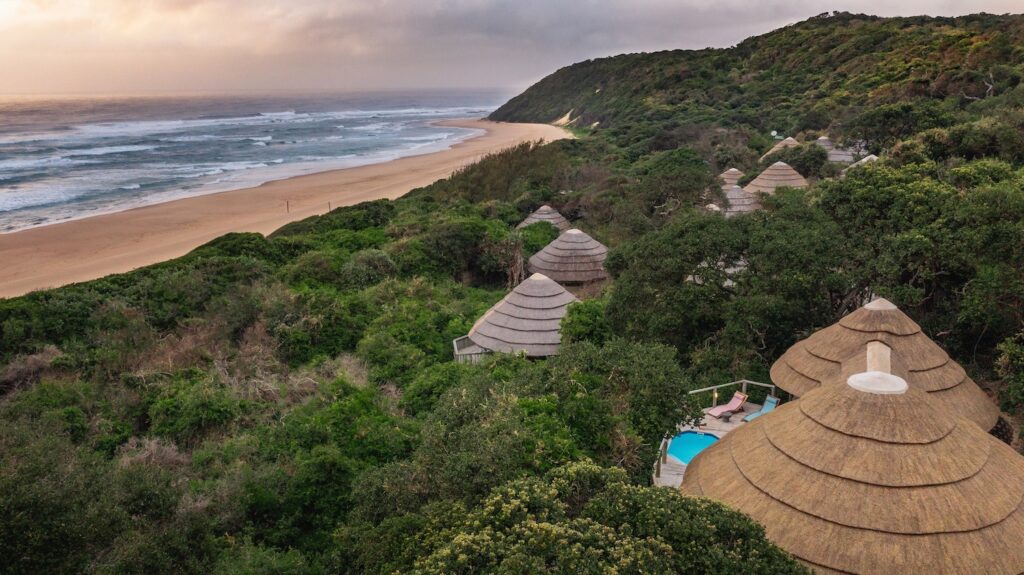
Our goal of seeing the longclaw attained, we could completely relax at the lodge: read books, write notes, gaze at the ocean. In the dense coastal forest setting, samango monkeys entertained us in the trees just beyond the porch of our reed-thatched chalet. Sunbirds – Collared, Scarlet-chested and Grey – darted over the canopy, and Yellow-bellied Greenbuls brought the shadows to life with their calls. The summer heat was assuaged by the cool water of the pool, and a shaded path through the coastal forest opened up onto a beach that, although deserted, was alive with the thunder of surf, the screech of gulls and the skittish march of ghost crabs.
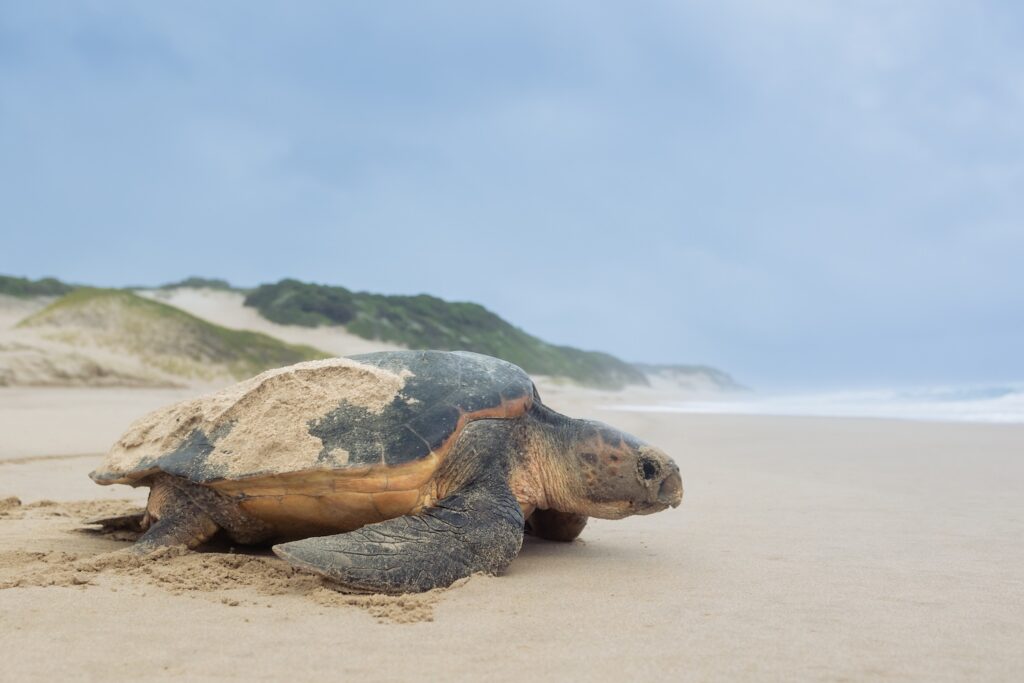
Walking north along the beach, we came across a wide trail that led from the sand on the edge of the vegetation towards the ocean where it was erased by the tide. Further along we found another, both signed with a zigzag crossing the trail. Back at the lodge we learned these had been drawn by the turtle monitors the night before, marking that they recorded the nesting of loggerhead turtles. Would we see one that night? Almost certainly.
On a walk that afternoon, in the shade of the forest canopy we were delighted to see a Woodwards’ Batis pair. This too is the only area where they are resident in South Africa.
Dinner beneath the trees that night, illuminated by moonlight and the faint glow of lanterns, was enhanced by delectable seafood and delicious anticipation. We had signed up to join Gugulethu and a couple of other guests on a turtle walk. Soon we were moving south across sand compacted by the outgoing tide. We skipped between ghost crabs and dreamt of turtles. Before long we spotted a shape incongruous with the uniformity of the sand and as we neared a loggerhead turtle materialised, sweeping the sand back and forth on either side of her shell as she sealed her nest. Then, satisfied and exhausted, she hauled herself over the sand towards the water, pausing every now and then to rest. Silently out of the dark, a pair of turtle monitors appeared, taking the opportunity during one of her breaks to measure her and tag one of her flippers. Finally, we all stood back and watched as she gained the surf and vanished beneath the welcoming waves. The turtle monitors ‘signed’ the turtle’s trail with a Z and walked south along the beach until they melted into the dark.
We walked on for a while until we spotted a small light on the upper reaches of the sand and realised it was the turtle monitors, checking their phone. A little further on we saw the now familiar shape of a loggerhead turtle. Her rear flippers were flinging up great streams of sand as she began to dig her nest. We sat nearby, illuminating the sand behind her with a red light so as not to disturb her. She paused after she had dug a deep broad pit and her chore became ever more precise. Slowly, her left flipper reached down, cupped a dollop of moist sand, hoisted it up and carefully placed it on the edge of the hole, compacting it so that it did not fall back. She repeated this with her right flipper, then her left and so on, a meticulous feat of architecture that had us mesmerised for a long while. Finally, after a long pause, she lowered herself down as far as she could and dropped the first stream of glistening eggs into the deep, cylindrical hole. The next stream of eggs soon covered those, and so on and so on until we lost count at 100. For over an hour, this became our world.

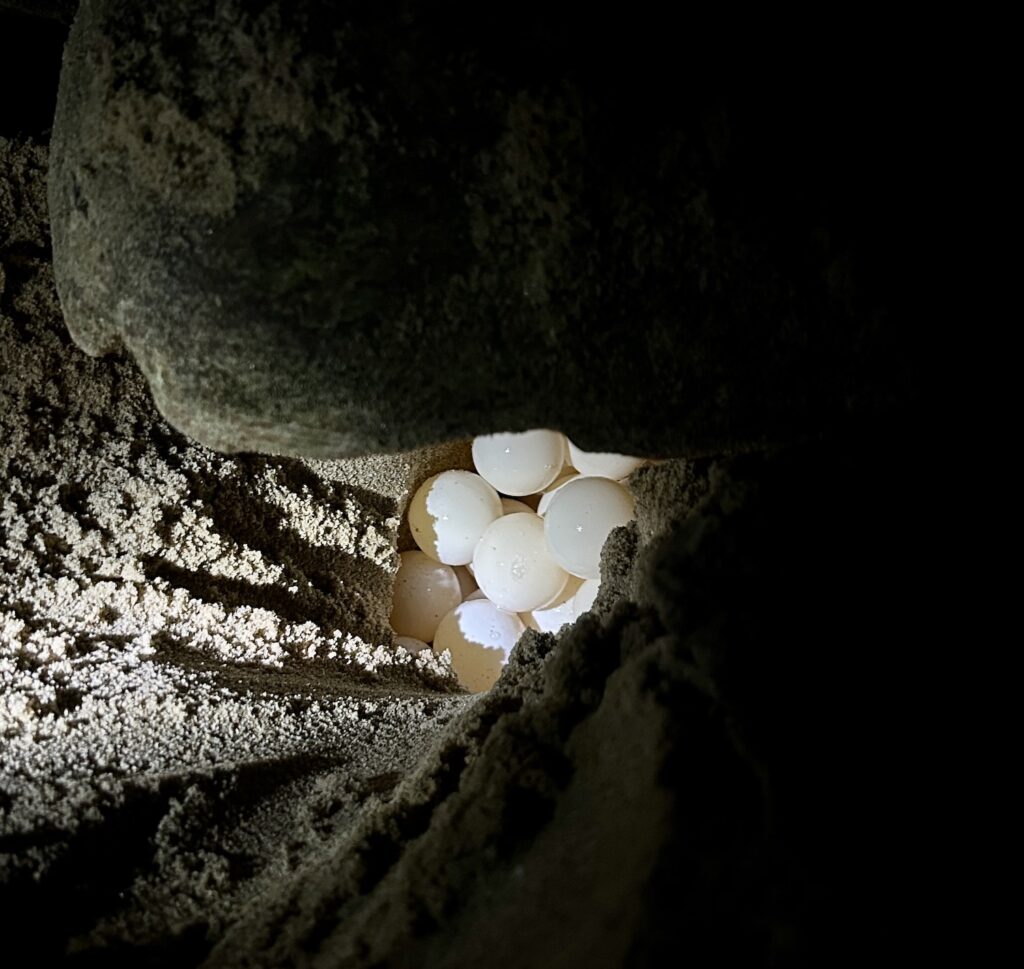

About two months later, Gugulethu explained, the hatchlings would emerge from the nest and run the gauntlet of predators like seabirds and crabs. Many would reach the water, but there the marine predators would take over. It is estimated that only one in 1000 survive to adulthood.
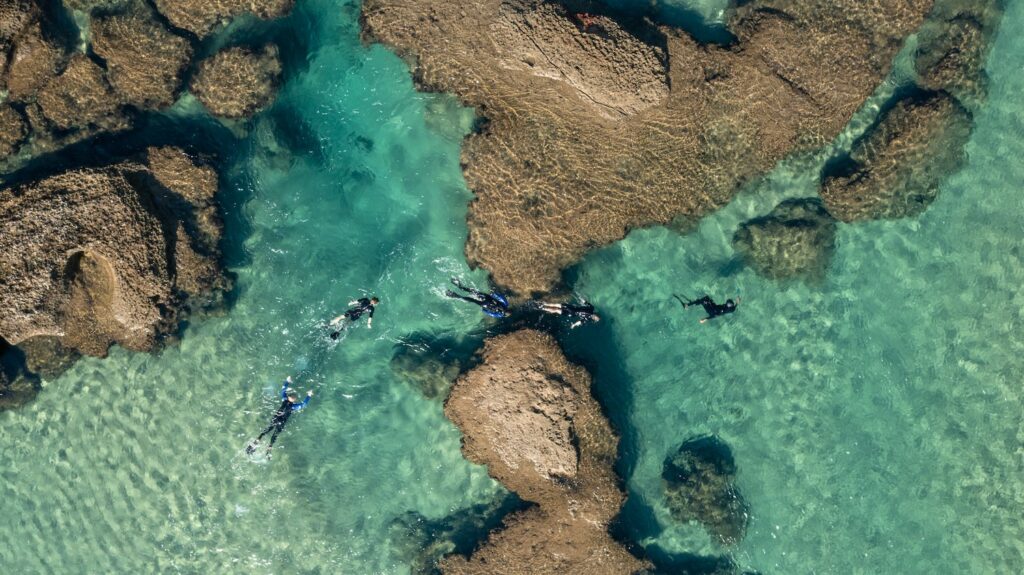
We made a similar transition to the water on our last morning, although without any of the risk. As we snorkelled in the waters close to shore, electric rays darted from the sandy beds beneath us. All manner of colourful fish, large shoals and singular beauties, paraded rocky alleys decorated with starfish, and an enormous moray eel glared and gaped at us from a rocky lair where its slender, spotted body threaded the porous rocks.
This was another of the worlds we hadn’t anticipated in our quest for a single longclaw. Perhaps this is the quiet magic of birding: you set out looking for one species, but along the way you find an entire landscape – its forests and oceans, creatures of feather and shell, its long stories written in sand and grass.
Anton was a guest of Thonga Beach Lodge.
Staying there
Thonga Beach Lodge is located in the north of KwaZulu-Natal’s iSimangaliso Wetland Park and is accessible by 4×4 or transfer from Sodwana. Activities include birding, marine safaris, scuba diving, snorkelling, turtle tracking, kayaking and cultural tours in the local Tsonga community, who have lived here for more than 1000 years. With no development 160 kilometres up or 100 kilometres down the beach, this is a secluded shore and marine sanctuary.
035 474 1473 │ res@isibindi.co.za │ thongabeachlodge.co.za
Ask about SADC rates and special packages.
Notable birds in the region
Lesser Jacana, Collared Pratincole, Livingstone’s and Purple-crested turacos, Green Malkoha, Narina Trogon, Trumpeter Hornbill, Yellow-rumped Tinkerbird, Rosy-throated Longclaw, Yellow-bellied Greenbul, Woodwards’ Batis, Grey and Olive sunbirds, Grey Waxbill, Pink-throated and Green twinspots.