Finding presence, healing, and community in the skies above the Garden Route
By Stephan van Wyk
As birders, we are intimately familiar with the thrill of the chase. We willingly drag ourselves out of bed at ungodly hours, pack our optics, and take on challenging terrain just to catch a fleeting glimpse of a localised endemic or tick a new “lifer.” It is an exhilarating, sometimes competitive pursuit. But lately, I’ve found myself wondering: what if the true magic of birding lies not in the numbers we accumulate on our spreadsheets, but in the quality of the quiet spaces we inhabit while we wait?
My own transition into this softer, more deliberate way of looking at the world grew organically from my time behind the camera. As a photographer and the creative director of a busy design agency, my daily life was a blur of screens, deadlines, and high-pressure demands. When I was out in the wild, the small things often escaped my attention, training my lens strictly on the large, dramatic mammals that draw crowds to the African bush. I was looking, but I wasn’t truly seeing.
Then, around 2019, the pace caught up with me. Feeling completely overwhelmed, I realised I needed to step back, breathe, and find perspective. I tried everything from meditation to personal development techniques to find my balance again—but it was actually in those quiet, empty moments between big animal sightings that my focus began to shift. I stopped scanning the horizon for predators and started noticing the small movements in the canopy.
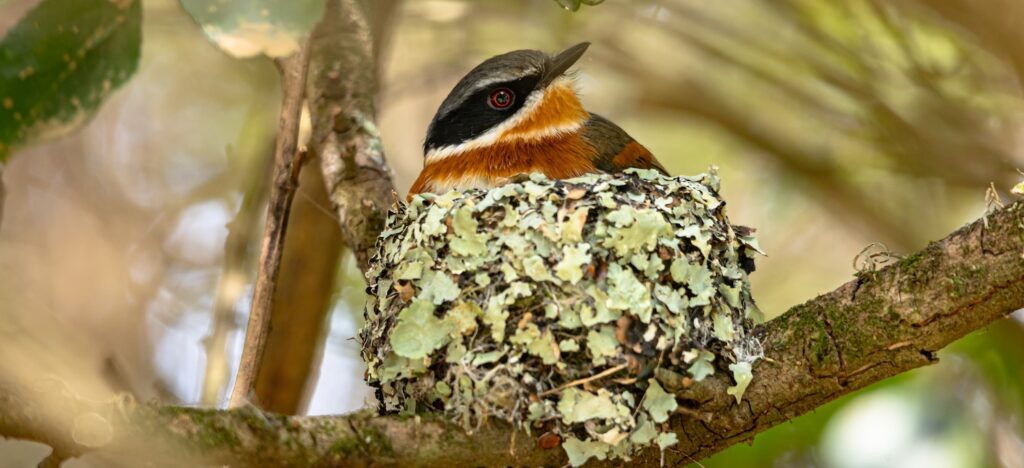
I didn’t even know all their names at first. But tuning into these subtle sights and sounds forced me to slow down and stay grounded in the moment. Immersing myself in the world of birds acted as a much-needed circuit breaker, quietening the daily worries and replacing them with a singular, present focus.
This habit of moment-to-moment noticing didn’t just ease my stress on the trail; it started to restore balance to my daily life. Long after leaving the bush, a heightened sense of awareness followed me back into my design studio. A walk down a tree-lined suburban street became a multi-layered experience. Suddenly, the world felt alive, and every rustling leaf meant something.
As it turns out, there is robust science behind this shift. Ecotherapy and neuroscience are beginning to prove what quiet observers have known for centuries: birdwatching is an intensive workout for brain health. Identifying a species in a complex, moving environment engages our visual, auditory, and cognitive pathways simultaneously, building a “cognitive reserve” that helps protect the brain as it ages.
Furthermore, natural soundscapes dominated by birdsong trigger deep-seated neurological safety signals. Because our ancestors evolved to understand that singing birds signaled a landscape free of immediate danger, hearing birdsong today coaxes our autonomic nervous systems out of chronic fight-or-flight mode. It lowers cortisol, reduces blood pressure, and breaks the cycle of mental rumination. When we combine this sensory focus with physical movement—whether walking beneath giant Outeniqua yellowwoods or paddling down a river—we get the dual benefit of stimulating the mind and exercising the body.
An “unhurried” birding festival is born
Experiencing this shift firsthand sparked a desire to build something purpose-driven. I wanted to share this restorative way of experiencing the outdoors, and so, the Bitou Birding Festival was born. Now entering its third year (scheduled from 23 to 30 October 2026), the festival is intentionally designed to be unhurried. Spanning seven full days, we invite participants to step away from the daily grind and experience the absolute best of the Garden Route’s biodiverse biomes.
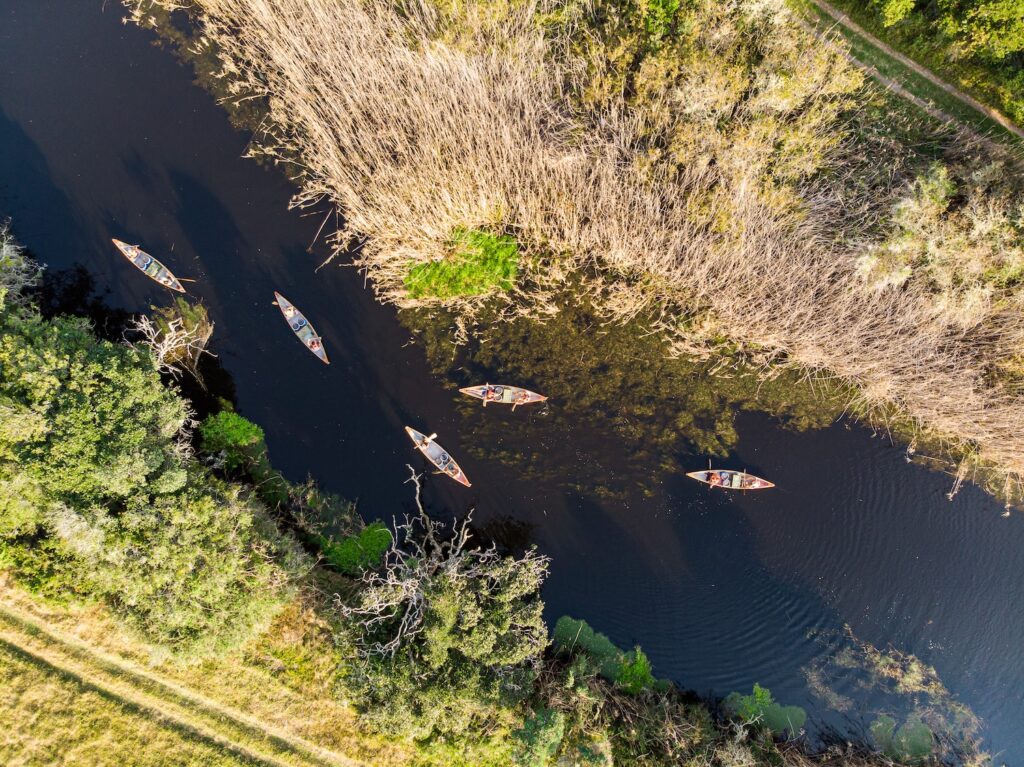
Plettenberg Bay is a unique landscape where five distinct habitats—from coastal fynbos and Afromontane forest to estuarine wetlands, sandy shorelines, and pelagic zones—converge in a remarkably small geographic footprint. We love to nudge birders out of their standard walking routines. At our central festival hub, the Kwendalo wellness estate, we host sensory-led “Bird and Breakfast” walks that focus on the language and behaviour of birds rather than just checking off names. We swap hiking boots for paddles, drifting down the peaceful Bitou River in canoes to watch kingfishers and waders from an intimate, water-level perspective. For the more adventurous, our pelagic boat trips head offshore into wild, open-ocean territory where Shy Albatrosses and petrels glide effortlessly over the swells.
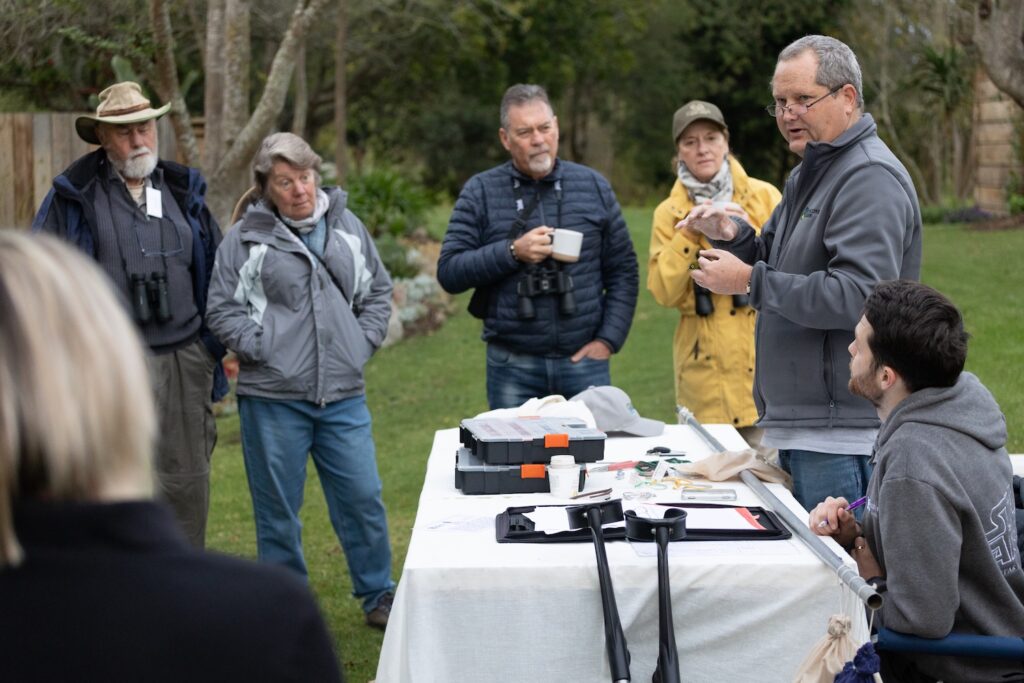
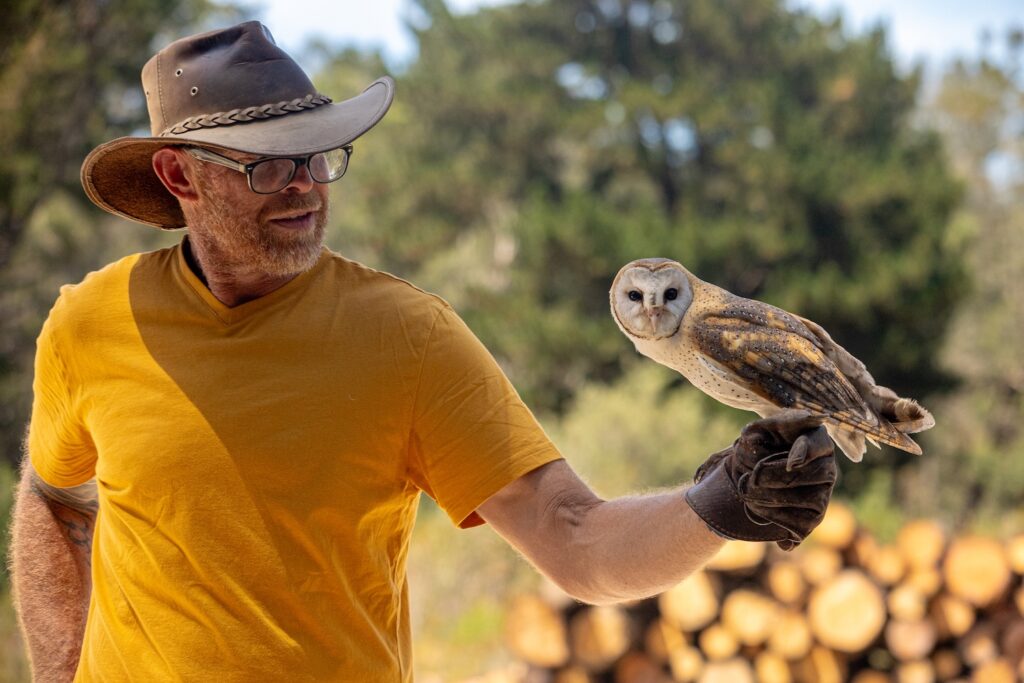
Mark Robson with the Raptor Rescue Display. Stephan van Wyk
Ultimately, the festival is a celebration of community and conservation. It acts as a bridge, connecting the public with local NGOs and researchers on the frontlines of avian protection. We believe that when people slow down and experience the personal benefits of nature, they transition from passive tourists to active, empathetic stewards of the environment.
Our invitation to you this October is simple. We aren’t asking you to rush, frantically tick a checklist, or conquer a trail. We are simply inviting you to step away, take a breath, and look up. You might be surprised to find that when you slow down to listen to the birds, you aren’t just discovering their world—you are quietly finding your way back to your own.