With fewer than 340 individuals thought to be left in the wild, the Botha’s Lark could become the first bird in mainland Africa to go extinct in modern memory, but recent breakthrough discoveries are giving conservationists hope.
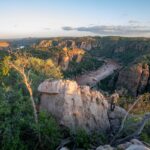
18 November 2025, Johannesburg, South Africa – A resident of South Africa’s high-altitude grasslands, the Botha’s Lark (Spizocorys fringillaris) has suffered a dramatic population collapse, with a 90% decline in the past decade. It is not yet completely understood why this bird has disappeared from almost all of its historic range, but the decline signals the possible collapse of an entire ecosystem: South Africa’s grasslands. As a ground-nesting grassland specialist, the species’ survival is closely tied to the health of its endangered habitat. Found only in parts of Mpumalanga and the Free State, the Botha’s Lark is a true endemic to South Africa.
One step away from extinction
Following the detection of this sharp decline, the Botha’s Lark was uplisted in BirdLife South Africa’s Regional Red Data Book of South Africa, Lesotho, and Eswatini to Critically Endangered, just one step away from Extinct in the Wild. To conserve the species, BirdLife South Africa established a dedicated grasslands conservation team to undertake research for the implementation of conservation measures. This team includes a biodiversity stewardship specialist to promote sustainable land management and agricultural practices, a community outreach officer to foster collaboration with local landowners and communities, and a conservation biologist to conduct field research and monitoring. Together, they combine research, engagement, and stewardship to safeguard the Botha’s Lark and its habitat.
Walking 500km to find a single bird
The team’s first task was to locate the bird, a challenge led by conservation biologist Matthew Orolowitz, the Birding Ecotours Fellow of Grasslands Conservation. The species had not been recorded for 18 months and was absent from most of its historic strongholds. Orolowitz walked more than 500 kilometres in search of this elusive bird. His persistence was rewarded in the summer of 2024/2025 when a small breeding group was found. Nineteen nests were recorded, each containing two to three eggs. Only eight chicks fledged; the rest were lost to predation or environmental causes such as unseasonal weather. This poor breeding success highlights the species’ vulnerability.
Alarmingly, no other breeding populations of the Botha’s Lark were to be found for another year. The scope of the search needed to be increased, so a large-scale search was organised by BirdLife South Africa’s grasslands conservation team, empowered by the help of over 40 volunteer birders. Access was granted to participants by farmers, communal land authorities, and other land users, and the team visited sites from Amersfoort to Harrismith. The event was a tremendous success, resulting in 5,644 observations of 227 species, including 31 species of conservation concern. The highlight was the discovery of a previously unknown population of the Botha’s Lark, demonstrating the importance of citizen science and coordinated field efforts! This breakthrough discovery, whilst signifying only the second currently known site for the Botha’s Lark, is of immense significance in the battle to save the species from extinction.
Work to create safe spaces
With agricultural land use shifting in response to economic and environmental pressures, the Botha’s Lark must continually search for the few remaining patches of suitable grassland. Orolowitz notes there is no simple solution to halt the species’ decline: “Many factors – agricultural expansion, grazing changes, climate variability, and infrastructure development – may be contributing. We must continue working with farmers, communal land users, conservation authorities, and schools to create safe places where the species can survive.”
Ernst Retief, Landscape Conservation Programme Manager at BirdLife South Africa, stresses the need to “conserve the complete landscape where the species occurs, benefiting not only the Botha’s Lark but other birds, mammals, invertebrates, and plants too.” Dr David Ehlers Smith, BirdLife South Africa’s Science and Spatial Planning Project Manager, adds: “While discovering small breeding populations is encouraging, the reality is dire: only about twenty sightings have been recorded in the past five to ten years. Confirming whether the species persists elsewhere is vital to guiding our research priorities and the lark’s survival prospects.”
BirdLife South Africa remains committed to conserving all the country’s bird species. Birds are integral to our natural heritage and play essential ecological roles. Of these, the Botha’s Lark deserves special attention and care to ensure its future. BirdLife South Africa calls on all birders, landowners, and conservationists to assist in saving this iconic species.