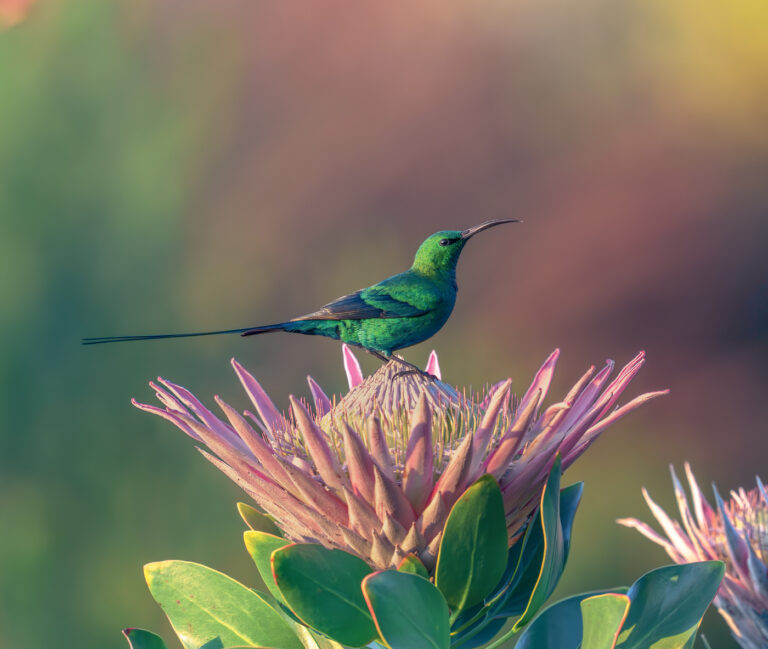
Image by HINESH PATEL, text by FAYE KNIGHT
African Birdlife is back with the bird of the month from our annual calendar! February features the nectar-loving bird renowned for their brilliant metallic-green plumage, the Malachite Sunbird.
Now, keeping to the question from January’s featured bird, “what makes this bird so special?” Besides catching sight of the bright metallic green of the adult male’s breeding plumage in the sun, the Malachite Sunbird is quite special in flora ecosystems.
- Native to southern Africa, the Malachite Sunbird plays a pivotal role in the pollinating of flora, especially in the Cape Floristic Region. By transferring pollen from one flower to the another, this sunbird allows for a successful reproduction of the plants they feed on and maintains the health of the ecosystems they reside in.
- Primarily feeding on the nectar of tubular flower species, this bird uses it long, curved bill and brush-tipped tongue to extract the sweet liquid from primary food sources such as aloes and proteas.
- Malachite Sunbirds typically reside in flower-rich areas where nectar is easily accessible and which provides good nesting sites, some of these areas include suburban gardens. During the non-breeding months, small insects, such as spiders, beetles and even caterpillars, are fed on as well.
- During breeding season, the breeding male’s distinct green plumage is bright in colour, with darker wings and a small yellow pectoral patch, while the female’s plumage is brown on the upperparts and a dull yellow below.
- As a monogamous pair, both the male and female have certain roles to play. After building the oval nest of grass and leaves, with a side or top entrance, the female will typically lay three eggs that she will incubate for approximately two weeks. Once the chicks have hatched, both take on feeding duties until they are fully fledged after 21 days.
- While the female performs brooding duties, the males establish territory by displaying energetic aerial chases, loud vocalisations and vibrant plumage exhibitions, and are often aggressive and untoward other species when nesting. Outside of the breeding months, Malachite Sunbirds are considered gregarious birds, often forming small flocks.
- In African folklore, these boldly coloured birds are often seen as messengers, symbols of freedom and good omens.
These beautiful birds are a reminder of nature’s intricate workings and this hovering gemstone is a sight to see when birdwatching! Next month we’ll dive into the Pennant-Winged Nightjar so be sure to keep your eyes peeled!
Be sure to keep a look for next month’s bird, the Pennant-winged Nightjar.