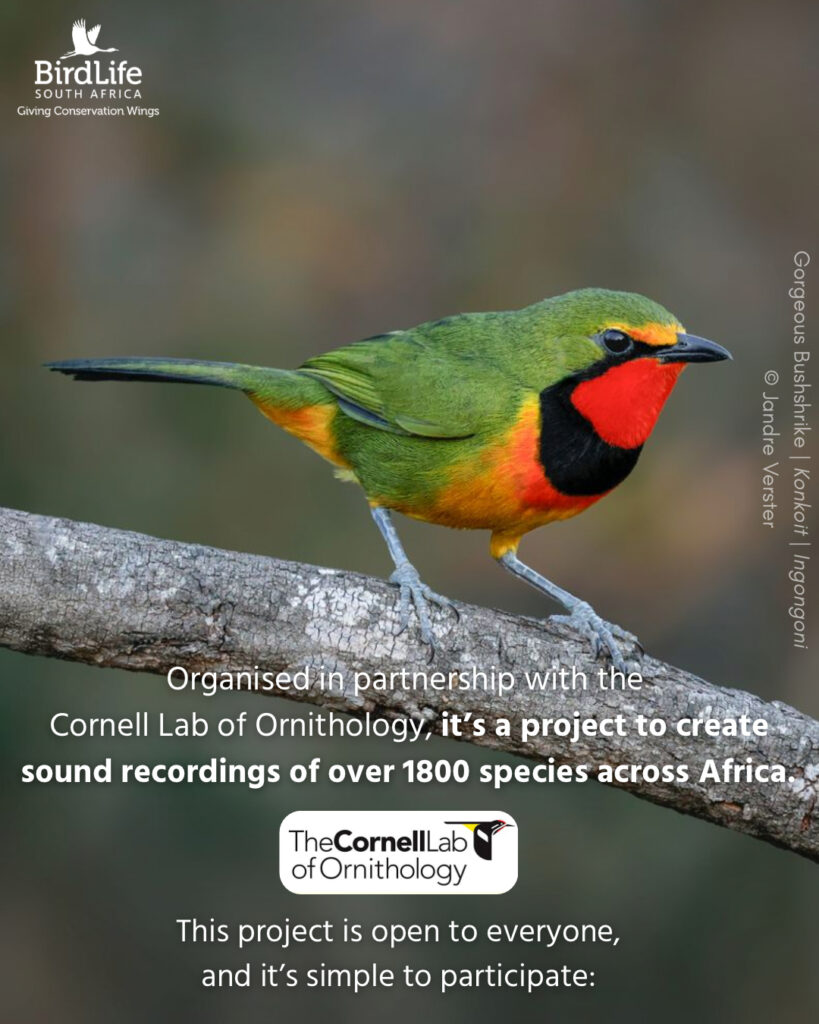
By Anton Crone, 11 February – Across Africa’s sweeping landscapes, birds are constantly singing, calling and chattering in a glorious chorus of sound. Yet despite the continent’s extraordinary avian diversity, Africa remains under-represented in global bird sound libraries. The Big Year of African Sounds sets out to change that by mobilising birders across the continent in a year-long effort to record Africa’s birds and preserve their voices for science and conservation.
Championed by the Cornell Lab of Ornithology, the project encompasses BirdLife Partners, international research institutions, conservation organisations and local birding communities. Together they aim to build a comprehensive and accessible archive of African bird sounds.
Bird vocalisations are essential data. Calls and songs play a crucial role in species identification, behavioural research, population monitoring and conservation planning. In many African habitats, birds are far more easily heard than seen, making sound recordings particularly valuable.
Modern identification tools increasingly rely on sound, including automated recognition systems used by popular birding apps. However, many African species are poorly represented or entirely absent from existing sound libraries. This limits the effectiveness of these tools when applied in Africa and highlights the need for more recordings from across the continent. The Big Year of African Sounds addresses this gap by encouraging birders to contribute recordings of as many species as possible, from common garden birds to rarely recorded endemics.
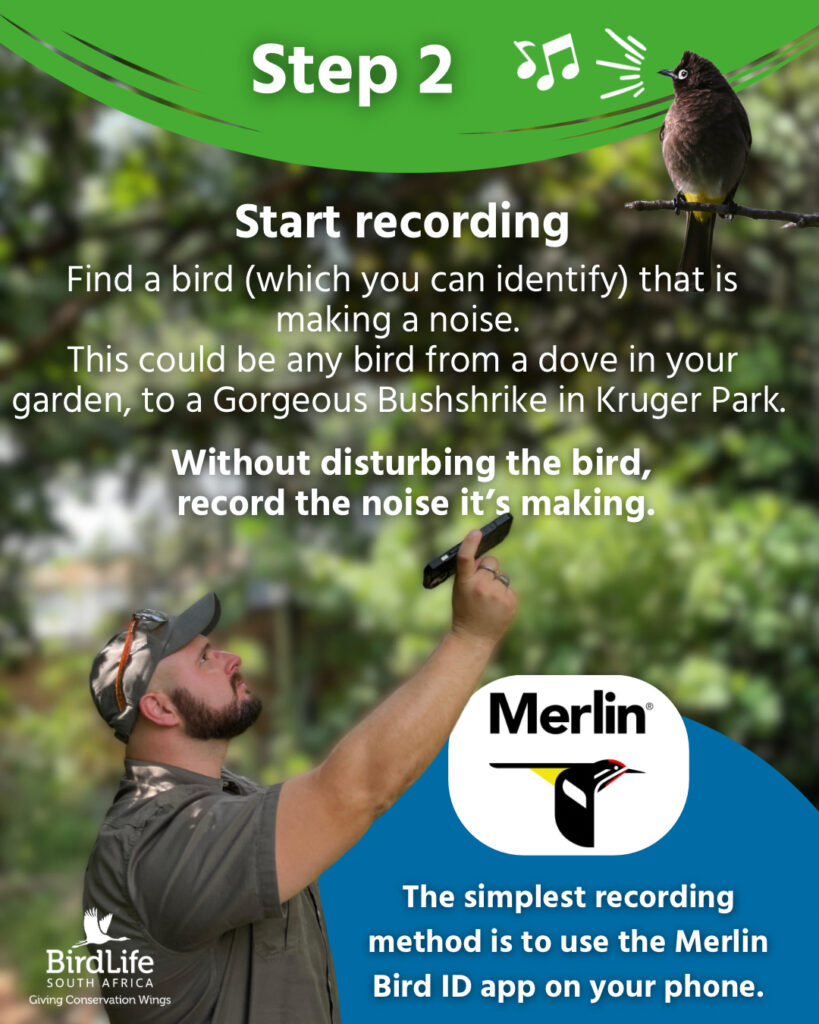
The project’s goal is a bold one: to gather recordings of more than 1800 African bird species from as many countries and habitats as possible. Contributions are welcomed from professional ornithologists and casual birders alike. Importantly, recordings do not need to be technically perfect. Clear recordings made on a smartphone can be just as valuable as those captured with specialised equipment, particularly for under-recorded species.
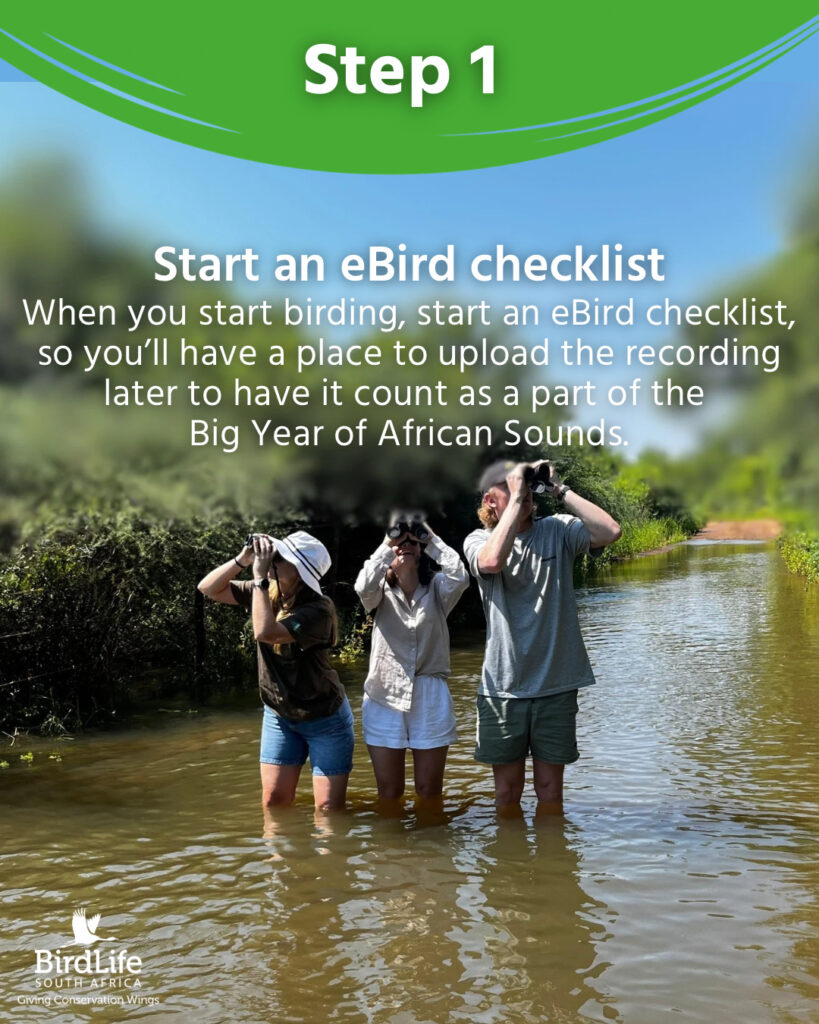
Participants upload their recordings alongside bird sightings using a combination of the Merlin Bird ID and eBird apps, ensuring that each sound is linked to location, date and habitat. This contextual information greatly increases the scientific value of every contribution.
Beyond data collection, the Big Year of African Sounds aims to build a community of African sound recordists. Workshops, online talks and local meet-ups help participants improve their recording skills and learn more about bird vocalisations, while regional and continental leader boards encourage friendly competition.
For many birders, recording birdsong opens up a new dimension. It encourages deeper listening and often reveals species that might otherwise be overlooked. It also provides an accessible way for birders to contribute meaningfully to conservation science without needing to travel far or invest in expensive equipment.
While the Big Year is a time-bound challenge, its impact will endure long after the year ends. The recordings collected will strengthen global sound libraries, improve identification tools and provide a lasting acoustic snapshot of Africa’s avian diversity.
Ultimately, the Big Year of African Sounds is an invitation to listen more attentively. To pause, press record and ensure that Africa’s birds are not only seen, but heard, understood and remembered.
Resources:
Read more about the Big Year of African Sounds at africansounds.org
Listen to BirdLife South Africa’s Avitourism Project Manager John Kinghorn speaking to Cape Talk’s John Maytham about the initiative:
Learn how to get involved and start recording Africa’s bird sounds below