Photo by LIZ HART, text by FAYE KNIGHT
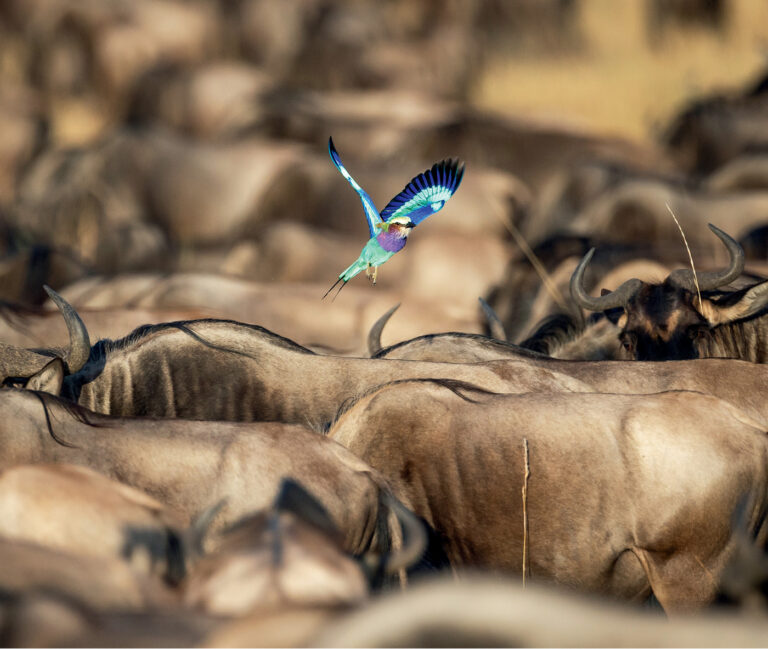
May brings a safari favourite for this month’s bird spotlight; the Lilac-Breasted Roller, photographed here by Liz Hart
Easily spotted by its bright lilac chest, bright blue undercarriage, black tipped and turquoise wings, and its elongated tail feathers, the Lilac-Breasted Roller is often found perched in open woodlands and lightly-treed grasslands, as if posing for the perfect picture for birders.
- The Lilac-Breasted Roller is often found in sub-Sharan Africa, ranging from Zimbabwe, Namibia, Botswana, a corner of South Africa, as well as Kenya.
- This dazzling bird is known as the national bird of Kenya, with its wide array of colours representing the many different tribes that make up Kenya’s communities. This bird is also known as “Kambu” in Swahili.
- The Lilac-Breasted Roller lives up to it name based on its flight displays. This chunky, medium sized bird got its name from the rolling and diving they perform during courting rituals, often rolling from side-to-side to impress their potential mate.
- Both male and female bear the same dazzling colours and tail streamers, making them a non-sexually dimorphic bird.
- This roller typically builds unlined nests in termite holes or natural tree holes, often invading the nests of Woodpeckers and Kingfishers.
- Both male and female rollers fiercely protect their nesting territories, often warding off potential intruders and nest predators.
- As opportunistic hunters, these birds often hunt insects flushed out by bushfires or swoop down to catch prey mid-air, showcasing their fearless agility and precision.
- When hunting, these rollers typically feed on arthropods and small invertebrates ranging from spiders, scorpion, centipedes and even snails. They have also been known to prey on slow moving lizards and chameleons.
- The species is classified as ‘Least Concern’ by the IUCN and has a large and stable population due to its wide distribution and stable population, contributing to this favourable status.
Whether perched atop a tree in Botswana’s savannas, soaring through the air with spectacular acrobatics and sparkling colours, or fiercely defending its nest, this bird is a true symbol of the wild and colourful world alive in Africa.