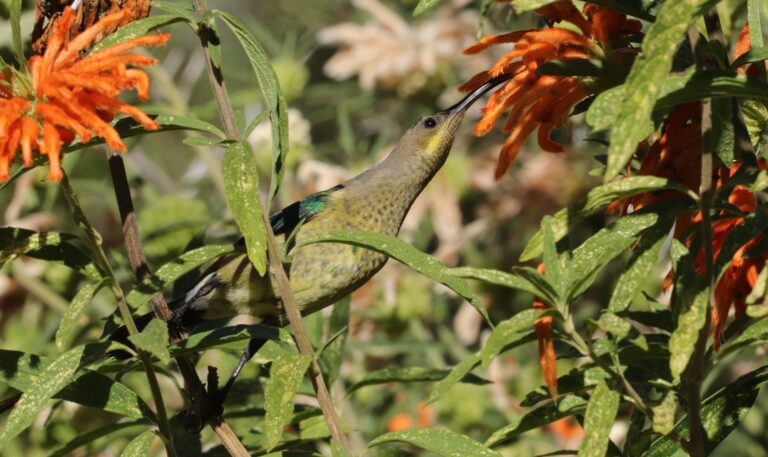
Winter brings the Free State alive as sunbirds return to flowering Leonotis, revealing a fascinating relationship between birds, nectar and seasonal change. By Dawie de Swardt.
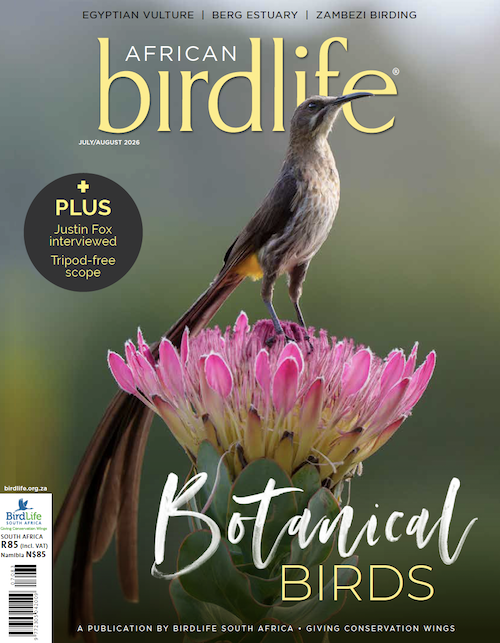
During the winter months of April and May flowering Leonotis leonorus (Lion’s Ear or Wildedagga) at the Free State Botanical Gardens, and at other suburban gardens in Bloemfontein, attracts Malachite Sunbirds and other sunbird species. During May 2026 I visited one of the stands of Leonotis at Botanical Gardens to photograph foraging Malachite Sunbirds. Then in theit winter eclipse plumage, the sunbirds mostly perched in nearby acacia or shrub, calling or flying into the air to catch insects and then flying down to the Leonotis flowers. Typically they will then move methodically from flower to flower probing for nectar and acting like an acrobats, stretching their body to lean downwards while probing for nectar in the hairy tubulars of the flowers. The resident White-bellied Sunbirds also join the feast and even Dusky Sunbirds have been observed in the past visiting the Leonotis nectar resource.
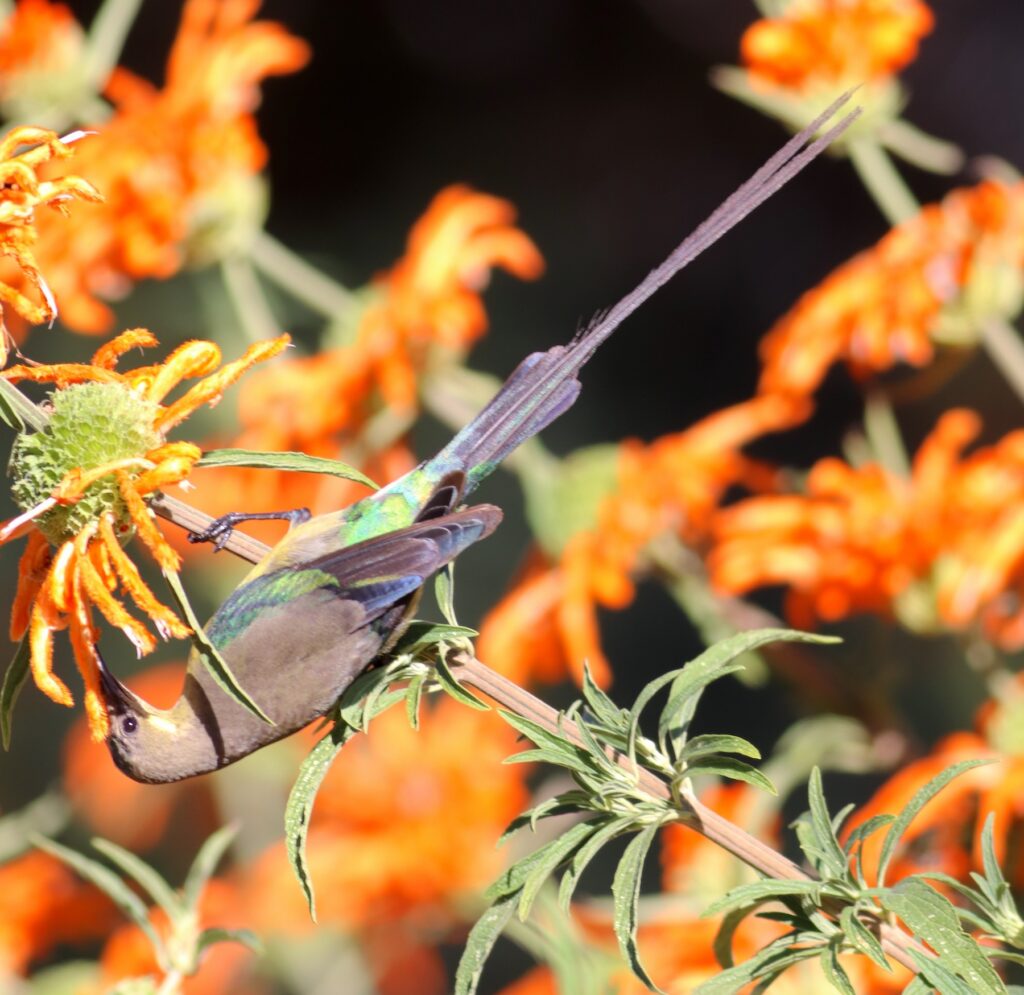
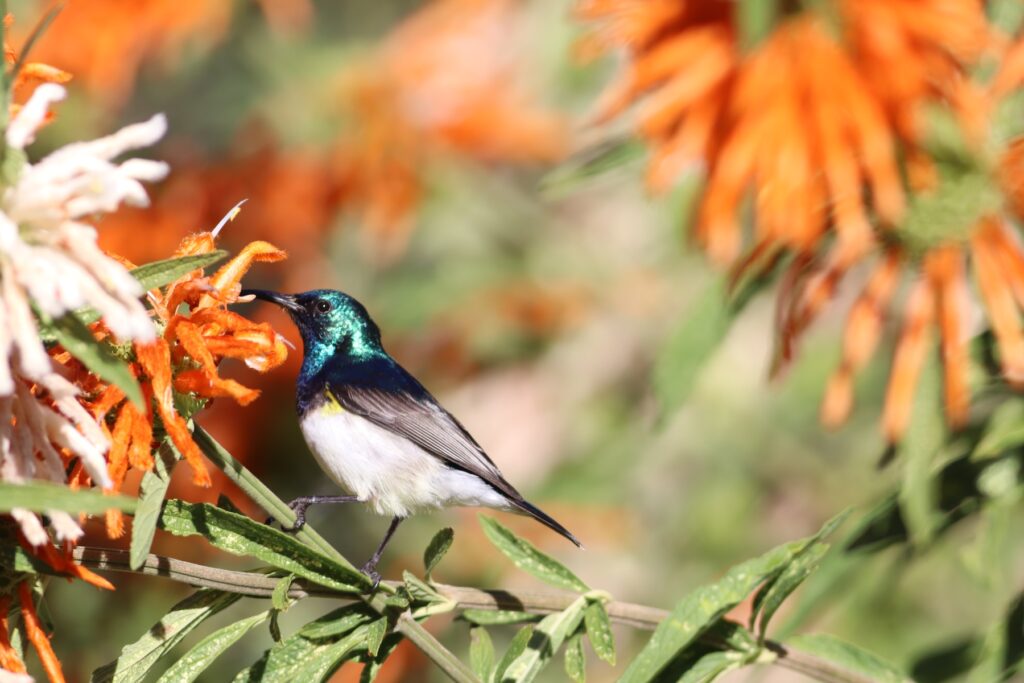
Malachite Sunbird winter movements were studied at the Botanical Gardens during the 1990s at these Leonotus clumps and ringing records show that individuals return to the gardens annually. One sunbird, ringed as a juvenile female, was recaptured three times later in different seasons – ts last recapture date was 10 years after it was first ringed. More than 16 individual sunbirds out of more than 140 ringed individuals were recaptured over the years showing that these birds do return to enjoy the nectar of the Leonotis flowers on consecutive seasons. If it is orange or red – in the case of flowering aloe species in winter – the cold Free State definitely heats up with active sunbirds foraging for nectar at the Free State Botanical Gardens or any locality in the Free State where these sunbird species occur!