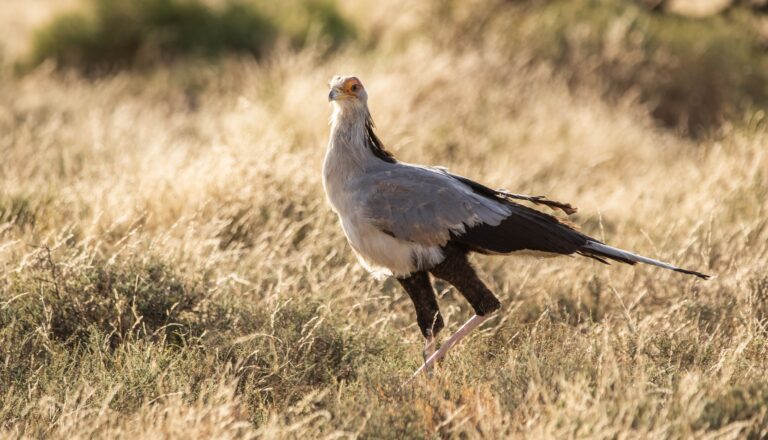
by Wesley Gush and Cassie Carstens
Two key skills are needed if you to study Secretarybirds in South Africa. The first is the ability to drive vast distances for long hours. These birds occur in most rural regions across the country, and familiarity with dirt roads and remote farming districts is essential. The second is perhaps the more critical of the two: a strong bladder. Drinking cup after cup of coffee with farmers and their families, on the ‘voorstoep’ at rickety kitchen tables, in comfortable chairs in sitting rooms or standing next to maize fields or a cattle kraal almost daily.
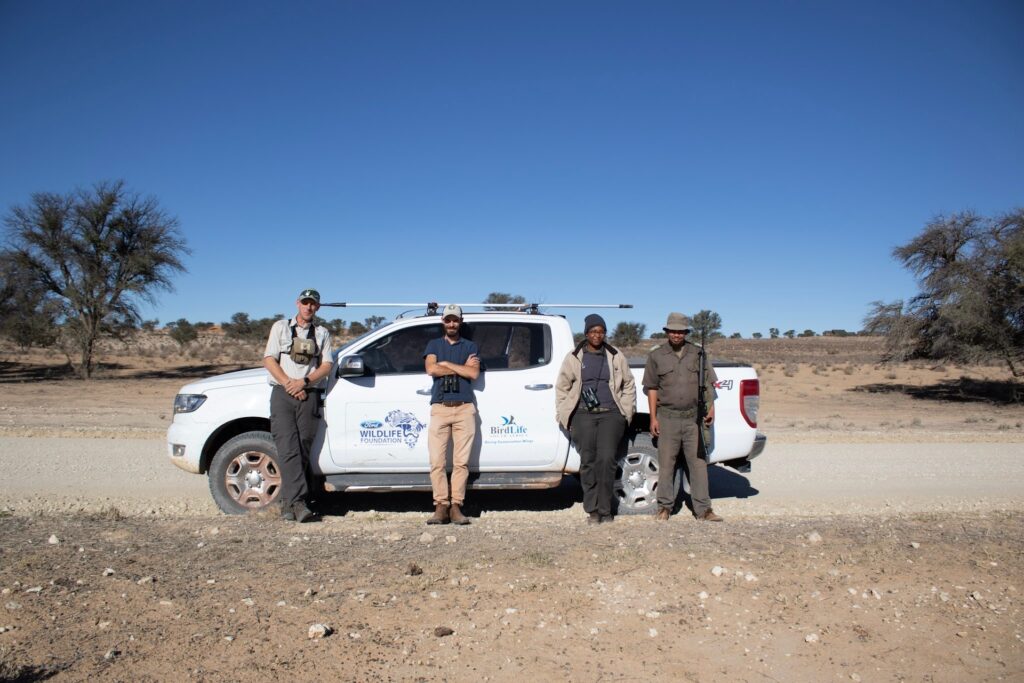
Our skills in this regard were tested to the limit in November 2023 when Wesley Gush and I travelled to the Hantam-Karoo of the Northern Cape to find and survey Secretarybird nests. Wesley, a PhD-candidate at the University of Pretoria hailing from the Albany District of the Eastern Cape, is investigating the impact of a warming climate on the breeding activity and movement patterns of Africa’s iconic, long-legged raptor.
We needed to find nests, specifically active nests in the arid parts of the country where he intended to deploy camera traps to monitor nesting behaviour, and eventually fit tracking devices to several young birds to see how they disperse across the landscape. This fit nicely with my overall mission of improving the Secretarybird nest site database for South Africa, monitored by BirdLife South Africa.
At that stage of proceedings, we were becoming desperate. A trip to the far north of the province earlier in the year, including stops at the ‘bustling metropolises’ of Van Zylsrus and Askham and a dusty trip into the Kgalagadi Transfrontier Park, had left us empty-handed. With the clock ticking on the year’s breeding season, we needed to get results soon.
Our salvation came from a snowy-haired sheep farmer in Calvinia, Francois van der Merwe. A long-time supporter of the BirdLife South Africa Secretarybird Project, and a conservation stalwart in the region, Francois is an avid birder, keen naturalist, and has calloused hands that don’t shy away from hard work. Over the course of a week, Francois would point us in the direction of no fewer than 10 Secretarybird nests – all within a 70-kilometre radius of the town.
After a brief pitstop at the charming Hantam Huis in Calvinia, we headed off to meet Francois. As expected, we found him among a herd of giant Merino rams, intently overseeing the shearing operation. After a firm handshake, we were given instructions on where to find the first nests and headed off into the unknown. With Black-eared Sparrow-Larks flushing from the faint tracks, and a Black Harrier gliding over the dips in the landscape, we eventually located two nests, both of which were sadly out-of-service for the season. We nonetheless recorded their locations and returned to the Tierhoek homestead in to settle in and eat dinner.
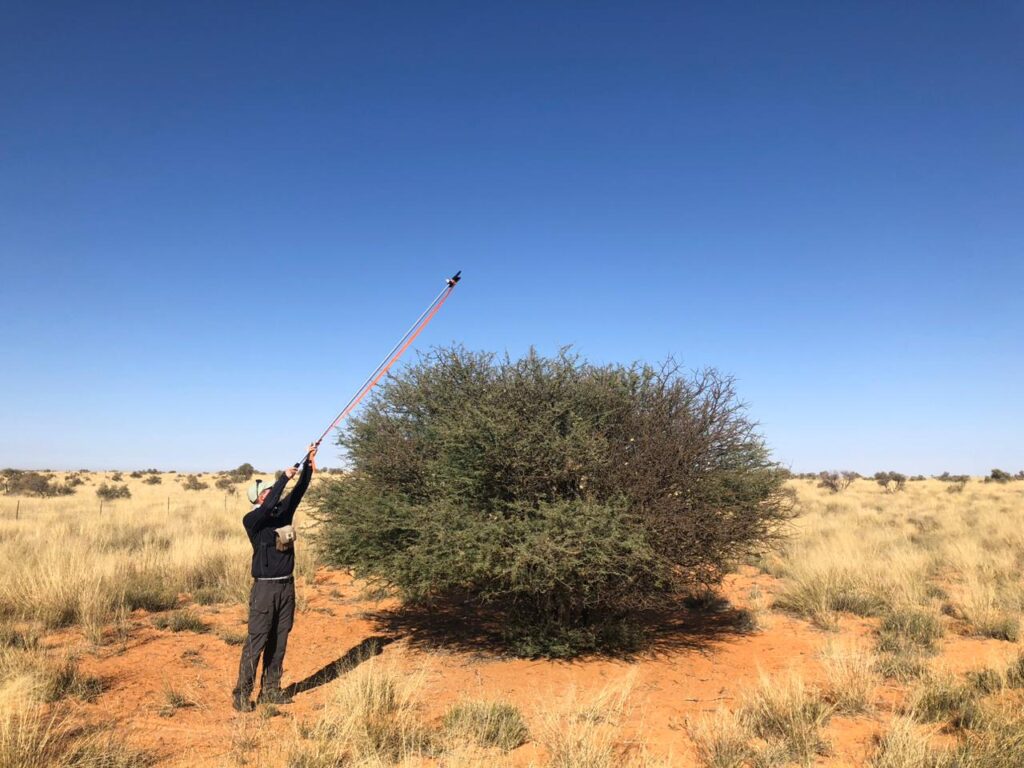
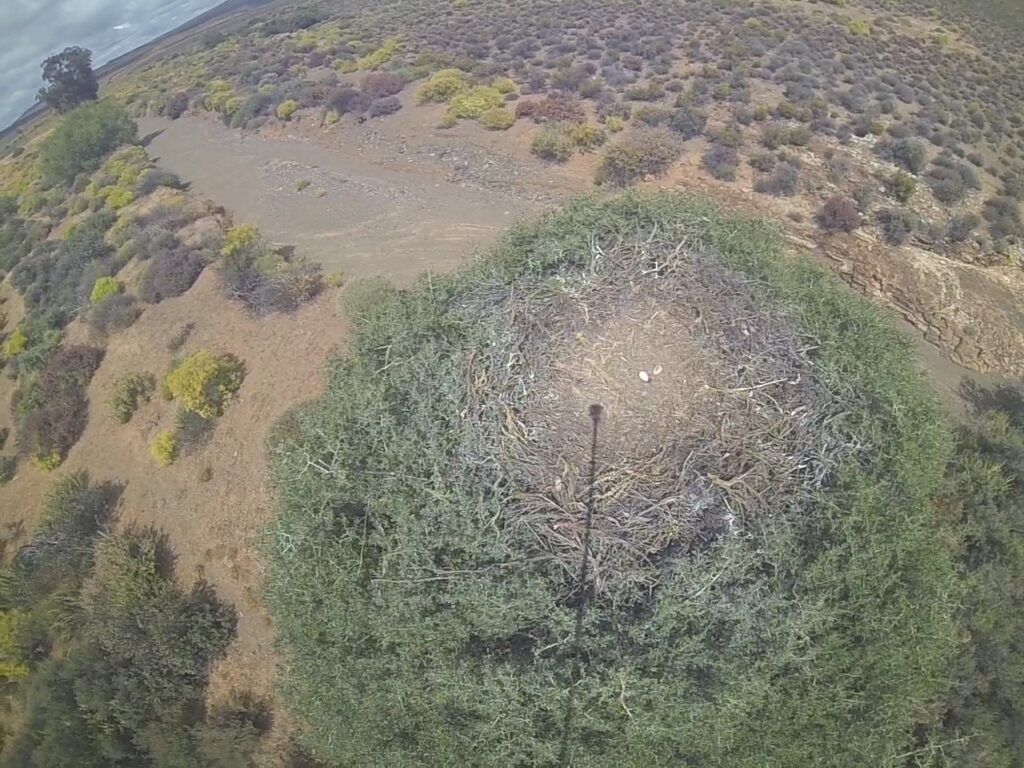
Early the next day, after several cups of coffee and another batch of detailed directions, we headed off to the south to explore a farm called Driefontein. Finding a nest based on verbal instructions can be a tedious task, especially when the farm tracks you are following have a habit of petering out into dry streambeds. Fortunately, this was not our first nest-finding rodeo, and after parking the bakkie in a rare patch of shade, we split up to cover more ground. Ultimately, we found three nests in the area, including our first active one! This was more conspicuous than the others, possibly because a giant black and white bird launched itself off the bush when we approached. A quick scan with the GoPro attached to a window cleaning pole (patent pending) showed a single egg, and we left quickly so that the parent could return to resume incubation.
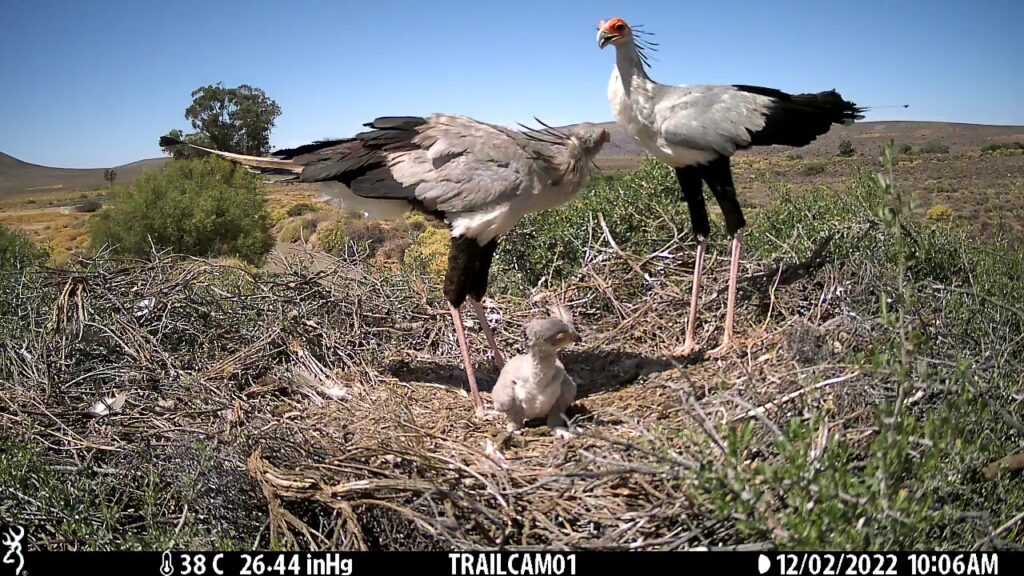
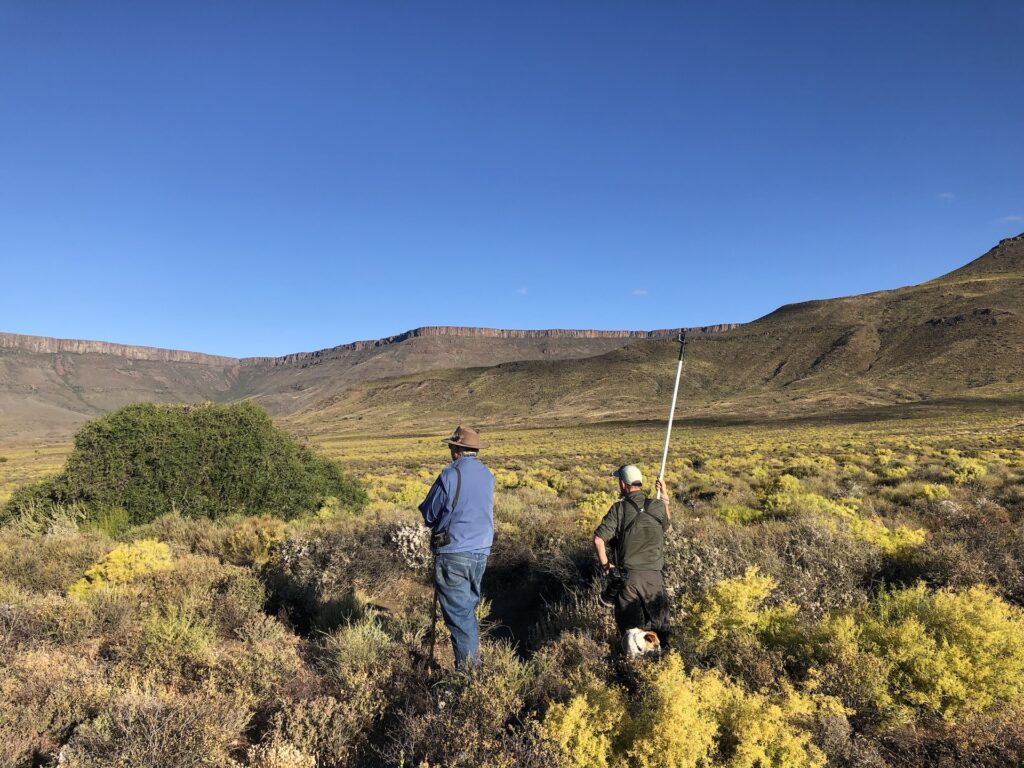
Francois joined us later in the day, and this time we headed north to a neighbouring farm Groot Toren, where we recorded the highlight for the trip: an active nest with three large nestlings. This nest site, adjacent to a circular wheat field and surrounded by the towering Hantam Mountains, was arguably the most beautiful setting for a nest we had encountered. We lingered around the tree for a while, soaking up the quiet of the vast plains and the knowledge that Wesley’s PhD finally had a starting point for data collection.
The last day of the recce found me laid low with a bout of tick bite fever. With swollen legs and a sour demeanour, I watched Francois and Wesley drive off on the last leg of the survey to Loeriesfontein and Nieuwoudtville. They reported scenic routes through lush valleys and canyons, open plains covered in low shrub as far as the eye could see, and check-ups on the last few nests of the week. I offered my congratulations through gritted teeth.
Early the next morning, we said our goodbyes, and with notebooks and cameras filled with data and images, we turned our vehicles east. Wesley and I parted ways in Beaufort West – me back to Durban and Wesley to Makhanda. Wesley would return to Calvinia a few weeks later to deploy camera traps at the two active nests and tracking devices on the nestlings that were about to fledge. What will these investigations reveal about the breeding dynamics of Secretarybirds in arid environments? Only time will tell, but fortified with numerous cups of coffee, we’ll gladly travel this long road with these amazing birds.